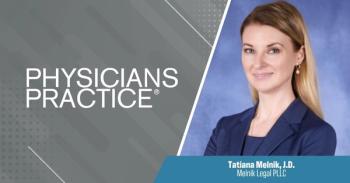
Health care attorney Tatiana Melnik, J.D., says practices adopting artificial intelligence tools should reread their vendor contracts, train staff every week and plan for patients who decline an AI scribe.
During and after the COVID-19 public health emergency, expect vigilance by federal regulators.
Telemedicine services and telemedicine fraud schemes both surged during the global pandemic. The U.S. Department of Justice (DOJ) remains committed to combating telemedicine fraud as not only a pre-pandemic focus area, but as part of its ongoing initiative to prosecute fraud in connection with COVID-19 and various pandemic relief programs.
During the public health emergency (PHE), Congress
As the pandemic stretched on, Congress passed the Consolidated Appropriations Act, 2022, which extended telehealth leniencies for 151 days after the expiration of the PHE. While the PHE expires on Jan. 11, 2023, the government stated that it will provide notice 60 days before the PHE ends. Because notice has not yet been given, many expect the president will soon extend the PHE (yet again) until April 2023. In any event, in July the House passed Advancing Telehealth Beyond COVID-19 Act of 2021, which will extend Medicare coverage of telehealth services until Dec. 31, 2024. And last month President Biden signed the $1.7 trillion spending bill, which prolonged telehealth pandemic-era flexibilities enacted as part of the Coronavirus Aid, Relief, and Economic Security (CARES) Act until Dec. 31, 2024. For the time being, at least, Medicare providers can continue to provide telehealth at home.
But regardless of the temporary waivers of restrictions and relaxed enforcement of certain telehealth provisions, telehealth remains a key area of potential False Claims Act (FCA) liability, particularly in the post-COVID-19 era. On July 20, 2022, DOJ
In September 2022, HHS-OIG published a
Explicitly concurring the last recommendation, CMS will be following up with the identified high-risk providers. On Nov. 1, 2022, CMS released its final
The government’s continued focus on COVID-19 fraud enforcement also means providers that received federal relief money will be scrutinized for health care and Paycheck Protection Program (PPP) fraud. For example, in April 2022, DOJ
There are several ways that providers can guard against becoming involved in conduct that may be considered fraudulent or violative of the FCA or AKS. Telehealth arrangements commonly involve coordination and potential referrals among multiple parties and by their nature present a degree of inherent risk. Seeking federal reimbursement for telehealth services may subject a provider to FCA if done in violation of legal restrictions. For example, before the pandemic, telehealth providers generally could not assess patients by telephone and instead used real-time audio-visual communication at specific qualifying sites. Currently, Medicare covers audio-only telehealth under temporary waivers that will remain for 151 days after the PHE ends. But audio-only billing can still present red flag for fraud. Billing primarily for audio-only telehealth services can be an indication that providers are cold calling beneficiaries to increase billings for DME and other services. After they disclosed conduct to HHS-OIG pursuant to their corporate integrity agreement, one medical system entered into a
Telehealth arrangements are also susceptible to AKS violations. For example, a telehealth company may refer potential payments or provide equipment or space to a provider to facilitate the provision of telehealth services while the provider may, even if not required to, refer patients back to the telehealth company. Depending on how this arrangement is structured, it could either implicate the AKS or fall under one of the AKS’ safe harbors. Other potentials for remuneration or inducements under the AKS reach beyond payments and include advertising for, or referrals to, telehealth companies; opportunities to earn telehealth per-visit fees and other reimbursement; referrals to specialists or labs; patient pricing arrangements and other situations that may be seen as arranging for furnishment of health care items or services. HHS-OIG’s advisory opinions continue to warn of inducements for referrals. A lab owner was recently
The safe harbor for
With COVID-19 not yet in the rearview mirror,