

Even if you're totally HIPAA compliant and know that your portal is secure, your patients may not be so sure.
Even if you're totally HIPAA compliant and know that your portal is secure, your patients may not be so sure.

Some HIPAA violations can be caught and fixed before the damage is done. Here are a few ways to do so.

Some HIPAA violations are obvious, but others can be less so and easy to miss. Here are four.

Password security isn't just for providers. Practices should make sure its patients are using tough passwords when using their patient portal.

Choosing good passwords and protecting them is a small but key part of guarding your patients’ protected health information.

Here’s what you do when a HIPAA violation affects your patients, but is the fault of one of your business partners.

Lost laptops, tablets, and phones are among the most common ways patient privacy is breached. Here’s what to do if it happens to you.

Practices do not just have to use staff members to improve their financial situation. The EHR can also be a huge help.

Looking for ways to increase practice profits? You may find the answer on your payroll.

The OCR is doing more HIPAA audits this year, and you need to be ready. Here’s how to do your own internal audit.

The Office for Civil Rights is upping its HIPAA audit game this year. If you want to be safe, you will, too.

To succeed in an accountable care organization, practices have to dedicate resources to the high-cost, frequent utilizers of care.
The ICD-10 transition will continue into the next year for practices. Here are some tips you’ll need to take in 2016.

With a dearth of coders thanks to the ICD-10 transition, some practices find that training current staff is the best way to get good coders.

During these early days of ICD-10 payers are accepting codes that aren't quite as specific as they should be. This won't last forever.
Everything seems fine on the surface with ICD-10 thus far, but is there a false sense of security?

The change to the ICD-10 coding system was greeted with dread and sometimes fear. But now that it's live, it's time to see what it can do.
ICD-10 is now the official language of insurance claims. Here's how to avoid translation problems and other tips to keep your head above water

Creating a game plan for dealing with an increase in denied claims during the first few months of ICD-10 can save you money and headaches.
Oct. 1 will be here before you know it. If you aren't ready for ICD-10, it's time to narrow your focus.

CMS recently offered new tools for the ICD-10 transition. But some providers are still floundering.
With less than two months to go before the ICD-10 goes live, most physician practices haven't done readiness testing. Why not?

Your patients probably don't care about ICD-10, but there may be situations in which you might want or need to tell them.

While recent concessions made by CMS on the ICD-10 transition may relieve stress for practices making the transition, some say it’s not enough.

Make the transition to the ICD-10 coding system a lot smoother with just a few tweaks to your practice work flow.

Start planning now to make sure you have a well-rested and ready staff to handle the ICD-10 coding transition come Oct. 1.

ICD-10 Charts is a free tool to aid the coding transition, but also a gift from a son to his internist father to keep his private medical practice alive.

Reduce the number of unpleasant surprises when the ICD-10 coding system goes live in October by starting tests now.

The ICD-10 coding system goes into effect October 1, but you may not be totally finished with the old codes for several weeks.
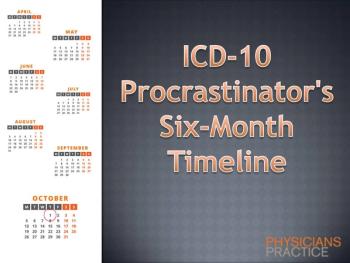
ICD-10 will be here before you know it. Here's what you need to do before October 1.