
CMS' 2027 fee schedule proposal would pay for RPM and RTM only when practice employees do the work. Here's what practices should review now.
Daniel Tashnek, J.D., breaks down five assumptions that hold remote care programs back, from patient eligibility to staffing and EHR capabilities.
Practices that struggle with remote care programs often share a common thread: assumptions brought in at the start that no one examined closely enough to challenge. Here are the ones I encounter most often, and what the evidence shows.
The logic seems obvious: patients with serious chronic conditions need the closest monitoring, so monitoring programs must be for them. But that framing misses how these programs work in practice.
Medicare's remote patient monitoring (RPM) benefit isn't gated on acuity. Any Medicare beneficiary with a chronic condition can qualify. The patients who benefit most aren't necessarily the sickest. They're the ones whose conditions are manageable, but whose management depends on consistent data over time. Hypertension is the clearest example. A patient whose blood pressure has been creeping up for six weeks is exactly who a monitoring program is built to catch. Rather than leaving a patient at heightened risk of heart failure or stroke until their next annual visit, providers can reach out proactively to manage their condition sooner.
The
A
This assumption stops more programs from launching than almost anything else, and it deserves a more honest answer than "you don't need new staff."
You probably will, eventually. A remote care program that's running well generates enough patient volume that it creates real work: monitoring data to review, patients to reach, care plans to document. That work needs to land somewhere. The practices that pretend otherwise tend to build programs that quietly collapse under the weight of what they added to an already full plate.
The more useful framing is that a well-run program funds the staff it requires. RPM and chronic care management (CCM) generate meaningful per-patient monthly reimbursement. Once a program reaches even modest scale, the economics support a dedicated care coordinator or clinical staff member. The revenue follows the patients.
For practices that want to get started without a hire, or that want to keep overhead lean while they build, outsourced care management services offer a practical path. An external team handles monitoring, patient outreach, and documentation while the practice determines what it can absorb internally.
RPM and care management programs like CCM and advanced primary care management (APCM) are built around different functions, but they reinforce each other in practice. RPM generates a stream of physiologic data between visits. CCM and APCM provide the care management infrastructure to act on it: care planning, care coordination, and regular patient engagement. A care manager reviewing a patient's blood pressure trend and adjusting a care plan in the same interaction is doing work that both programs are designed to support.
For patients, that means readings flow in, a care manager spots a trend during a routine check-in, and that conversation becomes part of their ongoing care plan. It’s one continuous thread of attention rather than two separate services. For patients managing multiple chronic conditions, that combination produces better outcomes than either program alone.
Operationally, RPM data gives care managers something concrete to work from during care management time, making interactions more targeted and easier to document. It also gives practices a real reason to keep patients engaged across both programs.
The billing follows from the clinical reality. A patient with two or more chronic conditions enrolled in both programs can be billed for each in the same month when the documentation and time requirements for both are independently met. CMS prohibits double-counting the same time toward both programs, so the documentation requirements need separate attention. Practices running these programs as one integrated workflow see better outcomes and often capture revenue they're already earning.
This one comes up most in practices serving older patients, rural populations, or patients with limited health literacy. It's a reasonable concern, but one that usually reflects an outdated picture of the technology.
Cellular-connected RPM devices don't require a smartphone, a Wi-Fi network, or any setup on the patient's end. A cellular blood pressure cuff works like a standard cuff. The patient takes a reading; it transmits automatically. For rural practices where internet access is spotty, cellular connectivity has opened this up in areas where it wasn't feasible before.
Enrollment does call for a real onboarding conversation focused on what the readings are for, who sees them, what happens when something looks off. But the device itself is rarely what stands in the way of launching or scaling an RPM program.
For some practices, it does, or at least initially. If the goal is monitoring a small cohort of the highest-risk patients, many EHR modules can handle the basics. The limitations become visible when programs start to scale.
An EHR is a system of record. It documents what happened during a visit: medications, labs, diagnoses, care plan updates. What it generally wasn't designed for is managing a continuous inbound stream of between-visit data and routing it to the right person at the right time.
At low volume, a physician or care coordinator can stay on top of incoming readings manually. At 50 patients, that's manageable. At 200, it isn't, at least not without automation, structured alerting, and workflow tools that most EHR modules don't provide. A blood pressure reading that has been climbing for two weeks can be obfuscated at-a-glance in the chart, unless someone has built a process around reviewing trends and flagging changes. A patient who hasn't transmitted in five days doesn't get an automated alert. Care management call notes don't automatically become a physician task.
Purpose-built remote care platforms handle the operational layer that sits in front of the EHR: device logistics, enrollment tracking, automated alerts, care team workflows, billing documentation. The EHR records what happened. The remote care platform is what makes sure the right things happen before there's anything to record.
These assumptions circulate in practices that haven't had a reason to look closely at how remote care works. The cost isn't always obvious: a program that never launches, revenue that never gets billed, patients who don't get enrolled because someone assumed they couldn't manage a device.
None of these are difficult to correct. A clear read of what the benefit covers, what the technology requires, and what the team can realistically absorb tends to resolve most of them. In most cases, the program is more viable than the assumptions made it seem.
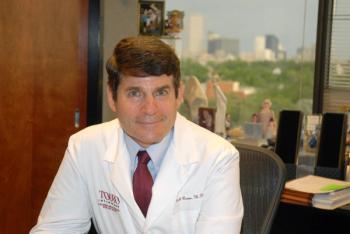
Daniel Tashnek is the co-founder of