Try cheap solutions now because your most reliable employee may be ready to walk.
Cut administrative burnout and physician burnout with virtual medical assistants, smarter practice workflow, and stronger physician-administrator relationships—freeing patient care time and reducing staff turnover.
Picture a fully booked health care practice on a Tuesday morning: phones ringing off-the-hook, patients waiting for up to 45 minutes, and staff moving from one urgent administrative task to the next. I have seen this scene in my own surgical practice and across specialties.
This was never the vision. None of us trained for years to spend our workdays buried in prior authorizations, insurance appeals and compliance documentation. Yet for many physicians, administrative work takes away from the patient care that inspired them to enter medicine in the first place.
The data makes the crisis hard to ignore. A
After nearly two decades in practice and several years studying staffing across medical groups, I have found that most physicians can identify the problem: administrative tasks are overwhelming the practice resulting in staff burnout and poor patient experiences. The harder step is pausing long enough to diagnose what is driving it and how to change it.
Change isn’t easy. It costs money, disrupts workflows and requires buy-in from staff who are already so stretched, it’s hard to find time to think. But complacency is costly.
In my experience, administrative distress usually comes down to two issues: hiring and retaining staff, and the overwhelming volume of administrative work.
My practice was growing rapidly between 2016 and 2019, and we needed to hire more staff to support our patients and clinical practice. At the time, we were struggling to find support for our office administrative team. What I needed was to find a faster, more effective way to complete administrative tasks without outgrowing the current real estate where my already-expensive Los Angeles office was located. I’ve had much time to reflect on these experiences, and they’ve challenged me to think differently about how health care teams are structured.
This is what inspired my work to start MEDVA, where we take administrative burdens off practices and enterprise health care systems. It stems from three clear principles I have relied on as both a physician and business owner, and can help health care organizations operate more efficiently while allowing clinicians to focus on patient care.
Traditional in-office administrative and support staff hiring is expensive, slow and unreliable, with a national
Much of the friction in practices stems not from a lack of competent people, but from a lack of systems. When communication with vendors, payers and patients runs through scattered calls, voicemails, portal messages and email threads, tasks fall through the cracks. Standardized workflows that determine who owns each message type, how it is logged, and when it escalates can quickly recover time and reduce errors.
Research from the American Academy of Family Physicians has linked physician-administrator relationships built on transparency and trust to better operational outcomes and improved physician well-being. When physicians and administrators share data and solve problems together, practices run more efficiently and staff become more resilient and likely to stay loyal to the job. If that relationship is strained or siloed, administrative burden grows for everyone involved.
Administrative burnout is not inevitable. With honest assessment, better aligned staffing models, clearer communication systems and stronger physician-administrator partnerships, practices can reduce friction and give physicians more time to focus on patient care. Ultimately, the goal is to create an environment where office staff feels supported and physicians can focus on care.
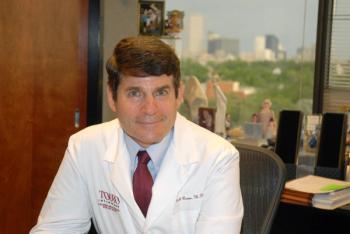
Dr. Steven Kupferman is co-founder and chairman of MEDVA, a virtual health care staffing company supporting medical practices nationwide. He is a board-certified oral and maxillofacial surgeon and founding physician of the Los Angeles Center for Oral and Maxillofacial Surgery.