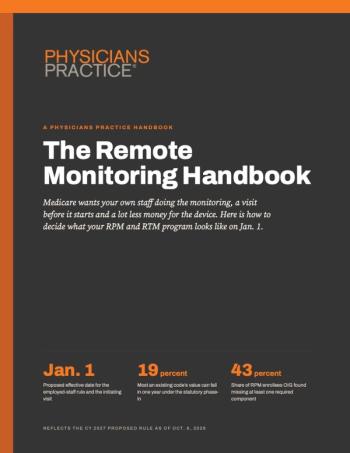

CMS' 2027 fee schedule proposal would pay for RPM and RTM only when practice employees do the work. Here's what practices should review now.
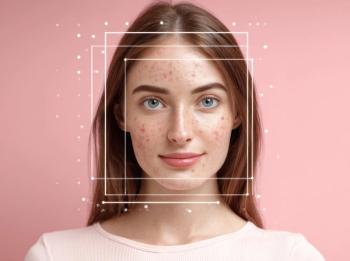
AI-driven digital twins map biological age and microbiomes to spot disease early and predict diabetes risk.
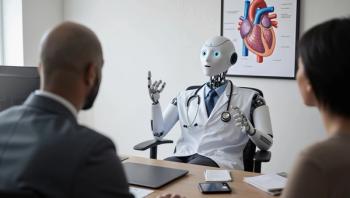
Physicians mentally run through many algorithms before settling on the best course of action for their patients. But when it comes to our health, like selecting a dietary regimen, it is a lot harder to predict how each choice will affect our bodies and whether it will suit us emotionally and psychologically. Recently, researchers at the Weizmann Institute in Israel have developed a method that can detect disease risk, initiate preventive treatment, and even run simulations to predict which treatment will be most effective. These researchers believe they are on the cusp of predicting disease before it causes symptoms or before the condition can be detected on imaging studies or lab tests.
Before the
Modern medicine largely relies on testing and comparing results with age-and sex-specific reference ranges. However, the health status and the aging process vary considerably among individuals. They have an AI model that analyzes typical bodily changes across 17 body systems across an individual's lifespan. This helps to identify variations from anticipated normal patterns. The model is built on a platform developed by
For instance, by tracking participants’ glucose levels, they determined the expected rate of increase in blood sugar for men and women. Their model detects any deviation from this pattern and successfully identifies pre-diabetes in 40% of people who were classified as healthy by conventional testing methods.
The study of biological age has uncovered substantial differences between the sexes. While men’s biological age generally increases relatively linearly, we observe
Menopause is an uncomfortable event for many middle-aged women, and menopause appears to reset the biological age clock. For example, a decrease in bone density is more strongly correlated with the time since menopause onset than with chronological age. Furthermore,
The Human Phenotype Project has also uncovered novel paths for the early diagnosis of a multitude of medical conditions, including breast cancer, inflammatory bowel disease, and endometriosis. That’s because these conditions are marked by alterations in the patient’s microbiome, which serve as a unique and identifiable signature or fingerprint.
Still, the greatest potential of the Human Phenotype Project resides in advancing personalized or precision medicine. Investigators intend to achieve this through a unified computer model that unifies all information collected from each participant in the project, creating a digital twin of that person. This model will predict what medical events the participant is likely to experience in the future and how best to prevent them. The model studied each participant's medical records and then made predictions. A specific piece of information is withheld each time, and the model is tasked with predicting it based on the existing data. This creates a generative AI model that can predict medical events and, in the future, is expected to create an entire personalized “health trajectory” outlining a person’s future health status.
The research team has already developed a model that, through analyzing participants’ glucose levels, has successfully predicted not only their future glucose levels, but also which pre-diabetic individuals are at the highest risk of developing diabetes within the next two years. Such predictions help prevent the disease or delay it at an early stage. Moreover, the researchers are already using the digital twin to check which dietary changes or drugs would provide the greatest benefit to each participant. In the future, the model is expected to encompass all the information within the database, enabling it to predict a wide range of medical events and spare patients the lengthy trial-and-error process of finding the most effective treatment.
This achievement is primarily made possible by the community of participants in
Bottom Line: This research from Israel has led to the creation of an extensive database that represents the most in-depth collection of human data in existence. Healthcare is entering an era of rapid change. Medicine will undergo dramatic AI-driven transformations. The digital twin is positioned to be a leading source of information and innovation to improve our patients' healthcare.
BTW, an excellent infographic on The Digital Twin is available