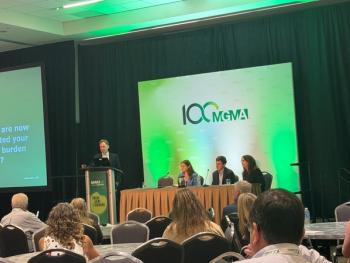
From payer contract homework to a 15-minute morning huddle, these are the moves practice administrators can make after four days of sessions and interviews at MGMA's centennial meeting.
Prosper Beyond VBC's Doral Jacobson on why most practices lose negotiations before they even get in the room, and what to do differently.
Most practices feel defeated going into payer negotiations before they even start. In this episode of
Jacobson walks through the three things that undermine practices before a single word is spoken: no strategy, no clarity on how their contracts are actually performing and a poor track record that creates fear of rejection. She explains how to use price transparency data without getting trapped in a numbers debate, which contract terms beyond the headline rate move the needle most — including escalators, unilateral amendment protections and termination clauses — and what questions to ask payers early to find out how much leverage you actually have.
The conversation also covers how negotiation strategy differs across primary care, specialty, behavioral health, ambulatory surgery and FQHC settings, and closes with a bottom line that Jacobson says applies to every practice regardless of size: payers have nothing without a network, and you have more power than you think.
Don’t miss our recent episodes on
Music Credits:
RELAXED CHILL JAZZ LOUNGE (OVER THE RIVER) by Tasty Tunes -
A Textbook Example by Skip Peck -
Editor's note: Episode timestamps and transcript produced using AI tools.
0:00 – 0:24 | Sponsor message
0:24 – 0:43 | Cold open Jacobson previews the episode's core message: payers have nothing without a network, and practices win negotiations every day because payers do need them.
0:43 – 1:42 | Introduction Austin Littrell introduces the episode and previews the conversation with Jacobson.
1:42 – 4:09 | Why practices feel defeated before they start Jacobson traces practice anxiety in payer negotiations to three sources: a poor track record that creates assumptions about how talks will go, no short- or long-term strategy, and a lack of clarity about how their own contracts are actually performing. She uses a Florida client example to show how not knowing your own contract landscape can lead you to nearly terminate your second-best deal.
4:09 – 7:13 | How to use price transparency data without getting trapped Jacobson argues transparency data is limited — it captures a rate in time but misses edits, administrative burden, payment policy erosion and value-based revenue. The real question to ask isn't how you compare to competitors, but what it would cost a payer to acquire your practice instead.
7:13 – 8:53 | The contract terms that move the needle beyond the headline rate Jacobson's top undervalued terms: multi-year deals with escalators to keep pace with inflation, administrative burden relief written into proposals, unilateral amendment protections so payers can't change rates without consent, and a 90-day without-cause termination clause.
8:53 – 10:20 | The questions worth asking payers early Three questions Jacobson recommends: what would happen to total cost of care if this practice were acquired by a health system; what can we do together to protect against contract termination; and would there be a network adequacy issue if we were no longer in network.
10:20 – 13:40 | How to sequence your asks and set the right cadence Jacobson's framework: do a full contract audit first, establish short- and long-term goals, lead with your value proposition before your proposal, and plan for negotiations to take longer than expected — sometimes 14 months. Best-performing clients are always negotiating because costs are always rising.
13:40 – 14:43 | P2 Management Minute Keith Reynolds shares practice management tips and invites listeners to submit their own workflow ideas.
14:43 – 18:20 | What a strong case actually looks like in the room Jacobson's dream scenario: competitive rates with other payers being actively fixed, a strong market position the payer can't afford to lose, good quality ratings, a clear value proposition and an engaged clinician who can tell the story. A quarterly relationship with the payer that has nothing to do with rates is also a significant advantage.
18:20 – 21:21 | How strategy differs by practice type Primary care's power is the referral. Nephrology's is HCC coding. Rural specialists have access leverage. Ambulatory surgery centers save money every time they avoid an inpatient admission. FQHCs lead with adequacy and prevention. Behavioral health needs to watch rate multipliers by credential level. The pitfalls are largely the same across all of them.
21:21 – 23:54 | Repeatable moves that work across markets Jacobson's framework: a one-page visual value proposition, a complete contract language review, proactive strategy before any payer "love letter" arrives and a tenacious follow-up cadence that assumes everything will take longer than it should.
23:54 – 24:46 | One tip to implement this week and outro Jacobson's closing advice: start now. Pick one contract and work on it. You miss 100% of the swings you don't take. Littrell thanks listeners and wraps the episode.