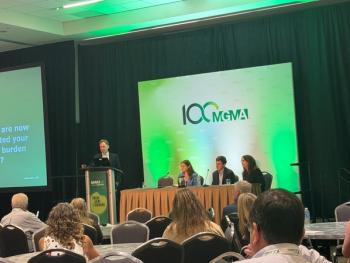

From payer contract homework to a 15-minute morning huddle, these are the moves practice administrators can make after four days of sessions and interviews at MGMA's centennial meeting.
How one medical group used AI scribing to redeploy scribes into a revenue-generating chronic care management program.
When I started evaluating
Both goals required a plan. We built one before we ever turned the tool on.
After evaluating several options, we implemented Doximity's AI scribing tool. The pitch was straightforward: ambient AI captures the encounter, generates a structured note, provider reviews and signs.
In practice, the first obstacle was technical. Our AI scribing tool was not natively integrated with our
The second obstacle was accuracy. Early on, the AI was not capturing everything we needed. Instructions required tweaking, prompts required refining, and there was a period where providers had legitimate reasons to distrust the output. Asking a physician to sign a note they do not fully trust is a non-starter.
What got us through both obstacles was not the technology. It was change management. We identified a few early adopters willing to work through the friction, gathered their feedback systematically, refined the workflow, and let their experience do the convincing. Provider-to-provider credibility travels faster than any top-down mandate. Within a few months, adoption had spread across the group.
The documentation results were real. Note turnaround improved significantly. Providers were finishing their charts faster and with less end-of-day burden. By every measure we had set out to hit, the implementation was a success.
And we were ready for what came next.
One of the most common fears surrounding AI adoption in health care is job loss. We heard it from our own staff. Our position from the beginning was different: we were not implementing AI to reduce headcount. We were implementing it to free up capacity so our scribes could do something more valuable.
Our scribes were not interchangeable with a generic remote workforce. They had worked alongside our providers in skilled nursing facilities and assisted living communities. They knew the patients, the families, the nurses on the floor. Those relationships were an asset we had no intention of discarding.
What we needed was a role that would put those relationships to work clinically. Chronic care management (CCM) fit the model precisely.
We already had experienced care coordinators generating CCM minutes through an established program. The limitation was structural: they were fully remote, conducting phone calls from offsite. For our patient population, many of them long-term nursing home and assisted living residents, that model left real gaps. Phone calls do not replace a familiar face in the hallway.
Our scribes, now transitioning into clinical assistant roles, were already in the building. They could sit with patients, have face-to-face conversations, involve families directly, and flag concerns to nursing staff in real time. They coordinated specialist follow-ups, tracked down outside records, and served as a communication bridge between the care team and the people around the patient.
The results validated the model. Our highest-performing clinical assistants were not only covering the cost of their own employment through billable CCM activity. They were generating a net positive contribution to the practice. A role that had previously supported documentation was now funding its own expansion.
The lesson here is not that AI scribing automatically creates new revenue. It does not. What it creates is capacity, and capacity is only valuable if you have a plan for it before the technology goes live.
Practices that approach AI implementation with a staged strategy rather than a wait-and-see posture will get more out of it. The staffing question is not a downstream problem to solve after adoption. It is part of the implementation plan itself.
In our case, that staged approach meant no layoffs, a stronger care model for a vulnerable patient population, and a new revenue stream that did not exist before. The technology made it possible. The plan made it work.
Eric Gordon, MPAS, PA-C, is director of clinical operations for a multisite medical group in the Dallas-Fort Worth area, with 10 years of experience leading operations across mobile acute care, telehealth and post-acute settings.