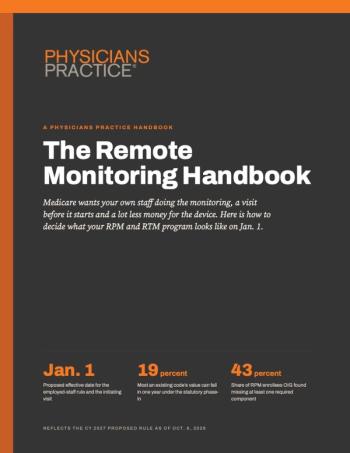

CMS' 2027 fee schedule proposal would pay for RPM and RTM only when practice employees do the work. Here's what practices should review now.
Hedy Lamarr's groundbreaking inventions challenge the status quo in medicine, inspiring innovation and change in patient care practices today.
I attended a one-woman play at the New Orleans World War II Museum, a must-see for anyone visiting New Orleans. The show was about Hedy Lamarr, a Jewish woman raised in Vienna, Austria, who married a munitions dealer who supplied armaments to the Germans and Italians during World War II. Through her husband, she became privy to Hitler's plan to annex Austria and his "final solution" to remove all the Jews from Europe. She found her marriage intolerable and escaped to London, then to the United States, where she became a famous Hollywood actress from 1940s to 1960s.
She also dedicated herself to inventing devices that she hoped would help the Allies defeat the Nazis. She created a frequency-hopping invention in which radio signals automatically and frequently changed from a ship or airplane to a torpedo, thus significantly increasing the accuracy of the torpedo hitting the target. The radio signal could not easily be picked up by the enemy and jammed. She obtained a patent for her invention, but the U.S. Navy rejected it, despite its superiority and accuracy, which were far greater than those of the method in use during the war, where large numbers of torpedoes missed their targets. She met with the top echelons of the military, and the reason that they told her that her clearly superior invention was turned down was that "it would be hard to sell our soldiers and sailors on a weapon system created by a woman, and we are not going to try!"
Today, her invention utilizing this "spread-spectrum technology" was the forerunner of devices that nearly every American uses every day, including the cell phone, GPS, and multiple other wireless devices. She did, however, receive recognition much later, because the patent had expired; Hedy Lamarr did not receive any financial compensation for her game-changing invention.
So, what does this story have to do with contemporary medicine?
I grew up with a "not invented here" mentality, which meant that if something wasn't developed within our institution or by our professors, then it wouldn't be a viable option. How many times has an employee proposed a new approach to patient care, only to be told that it can't be implemented in the practice? Or how about a resident or intern suggesting a better method of conducting an operation, only to be told by the surgeon that it won't work? Unfortunately, this scenario is all too common in the healthcare industry. We have become comfortable with the status quo and seldom want to leave our comfort zones.
Three examples emphasize my point:
Ignaz Semmelweis reported in 1847 that pregnant women delivered by doctors in the Vienna hospitals had more puerperal fever with an increased maternal and neonatal death rate, as high as 35%, than women who were cared for by midwives. Semmelweis was unaware of bacteria, germs, or hygiene, but he postulated that the doctors who came from the hospital were carrying "something" on their hands that the midwives did not have on theirs. Semmelweis suggested that the doctors wash their hands before going into the delivery room so that whatever was causing the lethal condition in the hospital would be removed.
He published a book of his findings, Etiology, Concept and Prophylaxis of Childbed Fever. Despite various publications of results where handwashing reduced mortality to less than 1%, Semmelweis' observations conflicted with the established scientific and medical opinions of the time, and his ideas were rejected by the medical community. Some doctors were offended at the suggestion that they should wash their hands, and Semmelweis could offer no acceptable scientific explanation for his findings. Semmelweis' practice earned widespread acceptance only years after his death, when Louis Pasteur confirmed the germ theory and Joseph Lister practiced and operated, using hygienic methods, with great success. In 1865, Semmelweis was committed to a mental hospital, where he died, of septicemia, at age 47.
Barry Marshall, M.D., a primary care doctor in Australia, noted that gastric ulcers contained bacteria in the pathology specimens. Marshall proposed that it wasn't hyperacidity that caused gastric ulcers, but rather a bacterial infection, Helicobacter pylori, that was the culprit. The elite scientists and doctors, who did not believe that any bacteria could live in the acidic environment of the stomach, ridiculed his theory.
In 1984, Marshall decided to experiment on himself. He had a baseline gastroscopy performed on himself, followed shortly thereafter by drinking a solution containing H. pylori. Three days after drinking the H. pylori solution, he developed nausea, vomiting, and abdominal pain. A repeat endoscopy eight days later showed massive inflammation, and H. pylori was cultured in the gastric juice. On the 14th day after ingesting the H. pylori, a third endoscopy was performed, which revealed a typical gastric ulcer. Marshall's illness and recovery, based on a culture of organisms extracted from a patient, fulfilled Koch's postulates for H. pylori and gastritis, but not for peptic ulcer. This experiment was published in 1985 in the Medical Journal of Australia. In 2005, the Karolinska Institute in Stockholm awarded the Nobel Prize in Physiology or Medicine to Marshall and Robin Warren, his long-time collaborator, "for their discovery of the bacterium H. pylori and its role in gastritis and peptic ulcer disease." Once again, it was several years from his identification of the bacterial culprit until the medical establishment accepted that it was an infection that caused ulcers, not increased acid, spicy food, or alcohol, that was responsible. Today, gastric ulcers are typically treated with antibiotics rather than surgery.
Stanley B. Prusiner, a maverick American scientist who for two decades endured derision from his peers as he tried to prove that bizarre infectious proteins could cause brain diseases like "mad cow disease" in people as well as in animals, was, like Marshall, awarded the ultimate in scientific vindication: the Nobel Prize in Physiology.
The infectious particles that Prusiner discovered, which he named prions, are composed of protein, and do not contain any genetic material. This detail distinguishes them from all other kinds of infectious agents, such as viruses, bacteria, fungi, and parasites.
Until Prusiner came along, nobody knew that simple proteins could reproduce themselves as though they were alive. Indeed, the concept was so revolutionary that he was shunned for years as a man who had overreached the limits of scientific sensibility. Although some scientists still question the prion hypothesis, a growing body of work from research laboratories around the world has led to a near-consensus that the feisty Prusiner has been correct all along. The outcome of receiving the Nobel Prize in the face of obstacles and public ridicule clearly demonstrates that it is possible to change the status quo. And there are more examples.
We all know that a profession in medicine is not easy. It is necessary to defer gratification for 10-12 years before a doctor starts earning money and can repay the tremendous debt accumulated during training. We have learned that there are no quick fixes for many of the problems that come our way. To navigate the bumpy road ahead, we need to know all that we can from the giants and leaders who have come before us and whose shoulders we stand on. But this doesn't solve the problem(s) and challenges of solving the current issues we face. Motivating others and encouraging them to change their behaviors or adopt our ideas is a challenge that we all face. However, with persistence and dogged determination, we can create a new future and better results for our patients.
Bottom Line: I didn't write this blog to rail against misogyny, which has improved since the time of Hedy Lamarr. I wish I could write and suggest how this obstructionist mentality can be explicitly overcome in healthcare. We have practiced far too long in the shadow of the status quo. Perhaps the story of Hedy Lamarr will motivate us to accept that the status quo has got to go!
Neil Baum, M.D., is a physician in New Orleans and the author of Business Basics for Creating and Managing a Healthcare Practice (Springer 2022)