How not to be the administrator who says, I didn't see that coming
Struggling with ad hoc reporting overload, OSU Physicians rebuilt its analytics environment from the ground up. Here’s what it learned.
For years, OSU Physicians handled data requests the way most large practices do: reactively. Clinic managers, physicians and administrators submitted tickets, analysts worked through the queue, and the list kept growing. At its peak, the faculty practice plan for The Ohio State University Wexner Medical Center was fielding 120 ad hoc reporting requests a month, supported by just two FTEs. Something had to change.
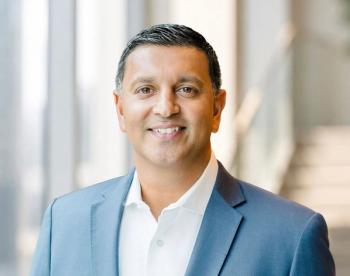
Brian N. Mitchell, SMB-A, Senior Director of Information Technology and Analytics and HIPAA Security Officer for OSU Physicians, Inc., led the effort to rebuild the organization’s analytics environment from the ground up, ultimately cutting custom report requests by 90%. He spoke with Physicians Practice ahead of his session at the MGMA Operations Conference in Charlotte, North Carolina, where he will present “Unlocking the Power of Real-Time Data” on April 13.
The following transcript has been edited for clarity and length.
Physicians Practice: What finally made you say your current reporting just wasn’t working anymore?
Brian Mitchell: Our journey dates back probably eight or nine years. We had a very traditional practice environment with a lot of questions about physician productivity, quality and patient satisfaction, and this growing catalog of requests. We were servicing it with a lot of ad hoc work. We had a ticket system internally where clinic managers, practice managers and physicians could submit requests, and we got to a point where we had about 120 ad hoc requests a month, and growing. At that point, we were supporting it with two FTEs, and the only solution would have been to continue hiring more IT personnel. We recognized there were limitations to that. We were lacking agility in servicing those requests, and that really spawned a thoughtful conversation about how to do this differently.
Physicians Practice: You cut custom report requests by 90%. What did that free up your team to actually do?
BM: The timing couldn’t have been better. The introduction of technologies such as AI, continued advances in our electronic health record, and a growing opportunity to integrate previously disparate data sources have all been identified as things our staff can now spend their time on. They’ve been able to innovate rather than respond to the same requests month over month.
Physicians Practice: You’re pulling from a dozen different systems. What was the hardest data source to wrangle into your platform?
BM: Probably getting visibility into our physicians and providing transparency around their work. Beyond being a clinician documenting in an electronic medical record, creating charges and managing procedures, orders and referrals, we had to pull physician information from other systems such as HR. At the time, we had an employee identifier for the physician’s employment record, and of course the electronic health record had their NPI, or National Provider Identifier. We found a tremendous amount of inconsistency in how to crosswalk that.
Getting the right people in a room to talk through how many different systems maintain all of that information, and then finding common ground on how to track individuals across their scope of work, was probably the single biggest hurdle. And beyond physicians, it ultimately affected non-physician providers such as APPs and even staff members who handle functions like registration or rooming a patient.
Physicians Practice: When a physician or administrator sits down with one of these dashboards for the first time, what do they usually say?
BM: We really get one of two reactions. The first group has used similar tools in other organizations, and when they see ours, they say they’ve never seen anything like it. The second group includes people who haven’t really integrated objective, fact-based data into their decision making in an agile way. A lot of our clinic managers, for example, have come up as MAs or nurses. They’re not trained on the business side of data.
My colleague Pam Gray, who I’m co-presenting with at MGMA, has developed a clinic manager training program that includes a course on navigating and working with data. For either audience, I think we’ve opened eyes to a different way to approach decision making.
Physicians Practice: Give me an example of a decision OSU Physicians made differently because of something these platforms revealed.
BM: Health care has been very retrospective for a long time. We’d look at encounters and the RVUs they produced, then measure patient satisfaction. Having agile data has helped us look more prospectively at how we design and deploy clinics. For the first time, we’re putting the patient at the center of our analytics and thinking of them as a customer: What is their clinical fingerprint with us? What does a patient need when they get referred into a specialty? What’s a reasonable expectation for customer service?
That’s starting to evolve not only how we deliver care, but how we think about new facilities, outreach opportunities and how we form relationships. In an incredibly complicated and contentious health care landscape, that has been invaluable.
Physicians Practice: Self-service analytics is a great idea until someone doesn’t know how to use it. How do you handle that?
BM: We’ve taken a very personalized approach. We have different roles across our organization: clinic managers, shared services like the billing office, our clinicians and clinical leadership. We offer standardized training, either on demand or in person, but more often than not we’ll arrange 30 minutes to an hour for someone to sit down with one of our analysts and connect their questions to the solutions in the system. The role of any given individual and the pressures on their position can change, so being able to connect our analyst directly with them as a consumer of our products creates a better onboarding experience.
Physicians Practice: Physicians, administrators, operational leaders: three very different audiences. How do you build one platform that works for all of them?
BM: This was a learning curve with our first-generation products. We used to create unique products for each audience so they each had one portal and one data set. More recently, we’ve developed approaches that integrate everyone into a common front end, with curated filters and bookmarks that connect each individual to their role.
The Dean of the College of Medicine has a view. Each department chair has a unique view. We can connect individual practice and location leaders with their own view. Having that common front end where any one of them can understand their role in contributing to broader enterprise goals has created a greater degree of accountability from the top down. It’s also cut down a lot of questions at year end when we’re talking about goals, how we achieved them and what comes next.
Physicians Practice: For a practice just starting to think about agile data, what’s the first move?
BM: You’ve got to get your leaders in a room and build some consensus on your goals as an organization, how you’re measuring performance and what common vocabulary you’re going to use. Here’s an example: if someone asks how many patients we saw last year, or how many encounters we had, those can mean very different things depending on who’s asking. Do we mean an appointment? A billing encounter? When I say patients, am I talking about distinct patients or total visit volume?
Those definitions are critical to building any kind of analytics environment. Some of it may be common knowledge, but actually writing it down and making it accessible to people new to your organization is incredibly important.
Physicians Practice: What is one tip you would give a practice leader that they can implement today?
BM: Start talking to IT. Start talking to your application owners and even your vendors to make sure you understand how any single application might interact with others as you begin to integrate data. Your HR system creates an employee record. Some of those employees also work in your electronic medical record. You’ve got to be able to pull that data together when you’re talking about patient satisfaction or quality measures.
After we integrated HR with our electronic health record, we were able to look specifically at labor hours per completed encounter. That was instrumental in thinking about how we staff certain clinics, because we could look at a single specialty at two different locations and see that we were using a completely different labor base at one site versus another. That visibility created better decision making around recruiting and workforce efficiency on a site-by-site basis.