From payer contract homework to a 15-minute morning huddle, these are the moves practice administrators can make after four days of sessions and interviews at MGMA's centennial meeting.
Up to 85 percent of revenue cycle touches never generate a dime. MedEvolve CEO Matt Seefeld explains the touch tax and how to stop paying it.
An orthopedic group running 22 days in accounts receivable can be six months from closing its doors. A large health system at 25 days in AR can be burning $10 million a month on work that never generates a dollar. By the metrics practices have leaned on for decades, both look healthy.
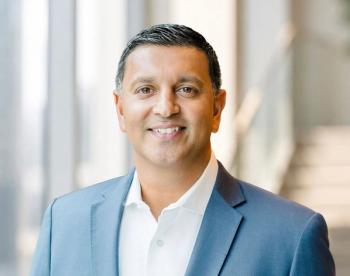
Matt Seefeld, CEO of revenue cycle technology company MedEvolve, calls the gap between those metrics and reality the touch tax: the mountain of staff work that goes into claims without ever producing revenue. Seefeld, a 27-year revenue cycle veteran who started in consulting at Stockamp & Associates, PricewaterhouseCoopers and Deloitte before building software companies, sat down with Physicians Practice to talk about why the industry's favorite benchmarks are lying to it, where denials actually come from and what happens when AI vendors promise to take the humans out. The conversation has been edited for length and clarity.
The conversation follows MedEvolve's
Matt Seefeld: Those are all lagging indicators. They tell you where you came from, and they're subjective. I'm glad we're starting with this, because I get really tired of seeing the same publications and articles around denial rates and benchmarks. I've been in this industry 27 years. I started out in consulting with Stockamp, then went to PricewaterhouseCoopers, then Deloitte, then started building software companies when I was 29 because I saw an opportunity. I don't know how an industry this large, impacting every American in this country, can operate a month behind. I'm still fascinated that I'll go into meetings with large groups and they're whipping out an Excel pivot table telling me how revenue looked last month, and God forbid you ask about strategy trends. It breaks.
Think of AR days. I made this joke the other day: I'll show you a large health system that has 25 days in AR and $10 million a month in wasted touches, touches that do not generate revenue. I'll show you an orthopedic group that has 22 days in AR and will be out of business in six months. These aren't measures of health going forward. They're measures of where we are and where we were, and you can calculate these things in different ways. Net collection rate is a big one. My NCR, I collect 99.9 percent of what I expect. First of all, nobody does, because there's this little thing called bad debt, charity write-offs and denials, but if you write off everything to contractual allowance, of course you collect 99.9 percent.
That's why here at MedEvolve I demanded the development of proprietary leading indicators that tell you where you're headed. I'm up in Minnesota right now with a very large client of ours, and our conversations are around leading indicators and action plans to improve on them. No other industry would operate like this, looking at data that's outdated, still using mediums like Microsoft Excel, month-old data, to drive work queues, and here we are in health care wondering why we have such a pandemic of closures now. Hospitals going out of business, rural health going out of business, ambulatory groups going out of business. It's alarming to see where I started my career in 2000, this young consultant who didn't know anything, and where I am now in 2026, and how much hasn't changed.
Seefeld: You paid taxes on April 15 this year on income from last year, correct? What if I told you that you're going to pay taxes on April 15 for the same income as last year, but I give you no income? How does that make you feel? That's the thing with the touch tax. The reason we've branded it that way is that there's an enormous amount of touches going into getting claims paid, or unfortunately not getting claims paid, that don't drive revenue. This is a billion-dollar problem in the industry.
The problem is the practice management and EMR companies were never, and I don't even blame them, they were never designed to measure every touch it takes from the time a patient enters the health care continuum, whether you're coming through an emergency room, an elective shoulder surgery or just a primary care visit, to get to a zero balance. On top of that, those touches were never classified as actionable or non-actionable. One of the things we had to do at MedEvolve was say, OK, I'm sitting on top of whatever EMR you want, I'm looking at every touch from a human, and now we're looking at AI touches too. Did you generate revenue on that touch? It's simple, yes or no.
So I can go to a client and say, did you know that of your 25,000 touches this month, 85 percent did not generate revenue? And the CFO is like, what? You are paying $5, $7, $9 a touch, and you get no money. That's expensive, and it's crushing margin.
We just did a study, put a press release out. I looked at 30 million touches, because this is all a unique data set that MedEvolve now owns. All our clients are out there doing work in our software, creating a new data set, and I was blown away to see that on average anywhere from 78 to 85 percent of touches are non-actionable. If somebody is working 40 denials a day, or following up on 40 regular claims a day, 85 percent of those don't drive revenue, but you're still paying for the human touch.
One of the indicators we look at is the percentage of avoidable touches. Our leading benchmark is that you should not be more than 15 percent, maybe 15 to 20 percent. Organizations that have more than 20, and a lot of our organizations are much higher than that when they start, have to identify the why. This is about making sure that if a human has to get involved in getting a payment, they have the tools and the training to get it done the first time they engage on that claim, and that's not the case. Avoidable touches are the plague, honestly.
I'm not going to get into onshore, offshore and all that, but I will tell you there are massive variations between revenue cycle teams employed here in the U.S. and employees that are outsourced. The biggest thing we're seeing is high turnover on those teams, so it's hard to train people when they're in and out the door. Medical policies keep changing, so it's hard to become an expert in resolving denied claims if you're not an expert in those policies and procedures. A lot of the escalations we see through our data, because we have a lot of revenue cycle companies on our platform, go to the clients themselves: I don't know how to solve this problem, so I'm going to send it over to you. Now you've got two touches and still no revenue.
I also love when clients say, well, I'm different, my orthopedic practice is way better. No. We've de-identified and looked at the data, and it's all within a plus or minus 5 percent range. There's no one better or worse. This is a systemic revenue cycle problem in the United States, not one practice better than another, or one administrator or one physician better. As we analyze our own data set across specialties, provider group sizes and states, benchmarks like wasted touches all fall in the same range.
Seefeld: Take the work drivers built into these systems, and I'll use AR as the example. You have an insurance team following up on unpaid or partially paid balances. Those work drivers and work queues were never designed to carve out non-actionable work, so a lot of the non-actionable touches happen because they're following up on claims too soon, following up too frequently, following up on claims that never needed follow-up. Examples after examples after examples.
The other piece, and I want to make sure readers understand this, is that there's no way for practices to objectively measure the performance of an individual. Go to any practice and ask how they measure the performance of an AR rep, and you're going to get, well, sometimes we look at productivity, we do some reviews of their account notes. Come on. Part of it is that there's not a good way to tell a person, we are now measuring you in a non-emotional way. In our world, one of our six benchmarks is a first touch payment rate: when Matt engages with a claim, touches it the first time, does a payment come in before he touches it again? You would think the PM systems could figure out a way to do that, but having put our platform on top of, I think we're at 27 EMRs now, it's not as easy as it sounds.
If I work a claim, touch it, nothing happens, and you get a hold of it and the payment comes in, that's two touches, but you actually got revenue, so you're in a much better spot than me, because I'm a direct cost to that provider. Now imagine a large physician group with 100 or 125 reps. To be able to quickly, in seconds, objectively measure people on a single metric like that is huge. There are no more feelings. I always say we don't want to measure performance on feelings. I think Matt's good at his job. Facts.
Another indicator we look at is how many touches, on average, it takes to get a claim resolved, and this one blew my mind. You shouldn't have a lot of touches to resolve claims, even complicated claims, neurosurgery, workers' comp, legal, stuff you know is going to require more effort to appeal or adjudicate. On average, we want our clients somewhere in that 1.1 to 1.3 range. But the amount of overwork that happens is crazy. Why? I'm following up too soon, I'm following up too frequently, I'm cherry-picking what I want to work. I'm just going to work the easy stuff today because my boss said I've got to work 50 a day. You start touching and touching claims that never needed to be looked at. That tax meter of touch tax to no revenue, you could have a group of 25 or 50 providers already spending a million dollars a year on wasted touches.
I was surfing on Father's Day, I live in San Diego, with an orthopedic surgeon buddy, and I started talking about this touch tax principle. He was fascinated. He said, you're telling me my overhead keeps going up and my income keeps going down because there are potentially hundreds of thousands, if not millions, of dollars being spent on touches by humans that don't generate revenue? I said, that's true. Everybody can associate with April 15. We all pay tax, and nobody wants to get taxed and have no income. And nobody's talking about this principle at all, because the data doesn't exist.
Seefeld: Everyone's placing blame on insurance companies, and trust me, they are not off the hook. But I can tell you right now, if you could reduce your non-actionable touches, reduce your touches related to preventable denials and not overwork claims, you're going to drive a ton of profit margin for your organization. That buys time and buys the ability to really think about business strategy, and that's far more accretive than hoping a third-party commercial insurer decides to pay you more or deny you less.
We classify touches very specifically. 835s are outdated and not helpful at all. When I hear first pass denial rates from people, I just ignore it. Somebody tells me the 835 says I have a coding denial issue. It's not specific enough. When we did the study of these 30 million touches and looked at denials, do you want to know what the No. 1 denial was? This is going to be mind-blowing. The No. 1 denial was related to eligibility, coordination of benefits, breakdowns that should have never occurred if you actually made sure, we call it financial clearance at MedEvolve, that you did all the things necessary before you treated the patient to ensure a high likelihood of payment without human intervention. Totally mind-blowing to me. How can we, in 2026, not do the basic verification process prior to service? No. 2 was coding. No. 3 was prior auth. No claim on file was super high. This wasn't one client. This was across the board.
So we're looking at this unique data set saying, wait a minute, the physician practice controls all of this. We haven't even talked about a major payer problem yet. We're talking about basic, fundamental process redesign and holding people accountable. Did you verify benefits? Did you get the prior auth? Did you collect coinsurance? Did you get a credit card on file, since patients owe more than half the bill now with high deductible plans? Did you make sure the coordination of benefits was correct?
Seefeld: What's happening in this industry now is you have physician groups that are not treating certain types of patients anymore because their insurance doesn't pay well enough. They won't take Medicare. They won't take Medicaid. In California, good luck. You come here to San Diego and try to get a specialist to look at your shoulder on Medi-Cal, Medicare, a bad Medicare Advantage plan, certain commercial plans. That's the sad state. Physicians feel as if they have to narrow their patient mix based on who they can drive the most revenue on so they can stay in business. I don't blame the physicians. It's literally a survival technique.
What these doctors don't know, and many are probably reading right now, is that they control way more than they realize. If I could get them the million dollars back in wasted touches that didn't drive revenue at all, what could they do with that million dollars? Sure, they could distribute it to themselves, or maybe they could look at the patients they're not treating and see if there's a way to make that work.
A lot of the mistakes made in revenue cycle are very preventable, but nobody is equating a touch to an economic value. If you could solve some of these non-complex denials around registration, which make up $50,000 a month in touch tax, guess what? You're going to get paid fast, you're going to get paid on time, you're not going to have multiple touches on the back office side, you're going to have a leaner AR team and less labor cost. We see this with our own clients. Labor capacity starts to go through the roof, because the cleaner you become upfront and the more accountability you hold people to in an objective way, all of a sudden things start to improve.
What do you do with capacity? We have a lot of clients that are growing, adding volume. You don't need to hire anymore. If you have great people, keep the great people. If you have A players, keep the A players. However, understand that if you're not growing, you will be reducing overhead, because you're going to really improve the quality of your process and your people with leading indicators that tell you in real time where you're headed. The business of health care needs to start operating like a true business, and not like it has for so many years, which is based on hope.
Seefeld: These are things humans are responsible for that AI companies are now claiming they can do better, and what we're finding is that's not the case. We're at an inflection point in health care, because everybody is using AI more. How much more do you use AI today than you did three months ago? It's crazy. I was at our national sales meeting in Utah this week talking to our CRO, and he's like, it's great, I take these transcripts, run them through an AI assistant, it turns them into scripting, and I put it into PowerPoint. It's amazing.
Well, here's what's happening in health care, especially revenue cycle. Hey, it's going to work the same in rev cycle. We're going to raise a bunch of money from VC firms or PE firms, we've got these super smart founder CEOs who have never spent a day in the revenue cycle, by the way, saying we'll just take the humans out, we're going to get everything paid. Excuse me, son, come here. Let me tell you something. Do you know how many people, how many touches and how many processes go in from the time a patient enters the health care continuum until a claim is paid? No idea. Henry Ford, if he were alive today, would be rolling over saying, wait a minute, this is as far from assembly line efficiency as you can get.
The one thing everyone needs to understand is that when you're building an AI process that requires you to do things in another company's system, you're at risk. When Epic says, I'm going to go build this thing myself, any company that had 90 percent of their strategy tied to Epic is done, out of business, gone. We've already seen it. When you're trying to build automation that relies on access to an EMR, access to a payer, it's risky. Look at prior auth automation. Nobody has been able to crack the code on that piece. Why? Payers are changing their rules and medical policies. No vendor can keep up with all the rule changes. Look at CDI, clinical documentation integrity. You're trying to remove humans, but you're contingent on payers keeping the hood open. On the financial side there's no interoperability. Clinical interoperability has come a long way, it's amazing, but even if CMS says, for these procedures we're just going to give you the auth, get rid of the handoff, that's great, does that mean the insurance companies are going to do it? Even if one does, does that mean all of them will? Absolutely not.
Our AI strategy is very different. It's predicated on the data created in our own system, which is unique and novel, and then using the outcome of that. If I start to see trends in denials, coding denials, prior auth denials, because of the touch data we're accumulating, how do I look at the attributes associated with those denials and touches that would make a system smarter? I see a future where we would potentially offer de-identified data to the right AI companies that want to automate processes and ensure the financial outcome is successful.
I've talked to a lot of autonomous companies. I spoke at HIMSS this year, and I was joking, I went around to the big booths with the nice carpeting and the cushions and the good drinks and the really cool gadgets, and I kept asking all of these companies: So you're taking the human out. That's awesome. Do you look at financial outcome? Most of them were like, what do you mean? I said, like a denial. You took a human out of coding. What if you get denied? It was crickets. If you're not learning on the outcome, positive, I got paid, negative, I got denied, neutral, we don't know, how are you training your models to make sure you're not just taking the human out but building confidence around payment?
Seefeld: Here's the scariest part, if you're ready for this. When the human touch goes away, sure, the AI touch is cheaper, but what we're seeing in our data set is that the human touch has to come back around to try to get paid. So now you still have the human touch, and the saddest part is we're seeing a lot more write-offs around things that were automated that are just never going to get paid. Now you're paying a really big tax. You're paying the human tax, the AI touch tax, and now you're also writing off the AR itself, so you never got any dollars for that.
That's what I'm trying to bring transparency to in this industry. I really am fearful that in the next two years, with the amount of money flooding into AI because of how we use it in our personal lives, it's going to accelerate the bankruptcy of this industry, literally, because people are going to get sold on the vision.
Seefeld: I worry for the physicians more than anything, because the doctors are watching their paychecks go down. There's not a single physician reading your stuff or listening to your podcast who will tell you they're making more money today than 10 years ago. Every one of them will tell you they work five times harder for less money, and their overhead keeps going up. So when a salesperson comes by and says, hey, I've got this cool tech, it's going to take out 97 percent of your humans, they've got to challenge these companies. Show me how you train your models on payments, making sure I get paid. Throw that at the sales rep and see what they say. Physicians and health care administrators have to be on the offensive now.
At the end of the day, they took the Hippocratic oath. They want to do right by the patient and treat as many patients as they can. That's why they went to med school. The thought that they're having to limit the types of patients they treat because they can't make ends meet if they take a Medicare that pays half of what a Blue Cross pays for the same procedure, or a Medicaid that pays half of what Medicare pays, it's terrible. It's gut-wrenching for me to even say, because where do those patients go? They go to the emergency rooms, and we're already seeing an onslaught of bad debt coming out of the ERs, because people with no insurance or not great insurance can't get in to see even basic primary care, let alone specialists.
A lot of your readers are probably in more rural communities, and this is where it's really harmful, because those rural hospitals can't support this. My identical twin brother is an ER doc in a small town in New Hampshire, and we talk about this all the time. I ask him, how many more level 1s and level 2s are you seeing come through, low acuity stuff that should have been primary care? He says, I see more and more every day. When I go to my primary care doctor with my son and say he's got a chest cold, a little congestion, that's a $200 visit, put him on antibiotics, off you go. I go to the ER with him and tell an ER doc he's got some chest stuff going on, a little bit of pain, and the second that doctor hears chest pain, it's a $5,000 workup. He's ordering a CT, he's ordering every lab you can imagine, because he doesn't want to get sued.
Now what would have been an affordable bill is not an affordable bill, and I can't pay it because I have a high deductible plan. So either I pay you $100 a month for five years, or you write it off, and that's what we're seeing. Bad debt is really accelerating, not to mention we're flooding our emergency rooms with patients who shouldn't be there, which takes up capacity for higher acuity patients. These are provocative things you don't read about and you're not hearing when you turn on the news. Seven hundred hospital closures projected, and nobody's talking about it.
Physicians in smaller communities, I guarantee, are feeling this right now. They're questioning, do I need to move back closer to the city? Do I need to move out of state? I personally have friends who are physicians, two of whom are in their mid- to late 60s and should have been retired. One flies to Northern California every two weeks as a cardiologist because he can't retire yet. Think about that. You can't make enough money in San Diego as a cardiologist, so you're getting on a plane, leaving your spouse and your teens, to fly to NorCal to do cath labs. Physicians have to get on the offensive now, and unfortunately a lot of times they're being led by administrations that are not looking out for their best interests. They don't teach you these principles in medical school.