States are limiting AI in coverage decisions. How billing teams can cite the laws on appeal, and why self-funded plans fall outside them.
Practice administration expert Lucien Roberts breaks down Medicare, fees and the business of medicine in a new series, "The Back Office."
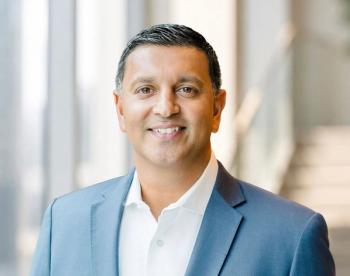
For many physicians, the business side of medicine can feel like a foreign language. Lucien Roberts, a retired practice administrator with 35 years of experience in private practice, wants to change that. In a new video series for Physicians Practice called "The Back Office," Roberts will walk physicians and practice administrators through the fundamentals of medical practice finance, from understanding accounts receivable to navigating Medicare fee schedules and payer contract negotiations.
The following transcript has been edited for clarity and length.
Physicians Practice: Today we're talking to retired practice administrator Lucien Roberts. Lucien, tell us a little bit about yourself.
Lucien Roberts: Sure. I'm a native of Virginia and worked virtually my entire career there. I ran medical practices for about 35 years, all of it in private practice, so I have a private practice bias. About five years ago, I started an infusion center, and I sold that last year.
Physicians Practice: Tell us about what this show is going to be about.
LR: The genesis of this show was a doctor a couple years ago who saw an accounts receivable for the practice of, let's say, half a million dollars. He thought we were going to collect half a million dollars, not realizing that accounts receivable is based on charges and not what you expect to collect. I told him, nope. If we're doing well, we'll get about $300,000 of that half million. He lost it, and what followed was a series of lessons on how the Medicare fee schedule drives most things, how collectibles and collection percentages and allowances and coding and ACOs all fit together.
I don't think he understood until I asked him three questions, and I'm going to ask you the same three questions now. Medicare started in 1965. What was the average life expectancy then, combined men and women?
Physicians Practice: Let's say 70.
LR: 70.2. What is it in 2024?
Physicians Practice: Let's say 78, 79.
LR: On the button. That's a 12.5% increase. Since 1965, life expectancy in the U.S. has gone up 12.5%. In 1965, the average American lived to be 70.2, so Medicare only had to pay for 5.2 years per person. Flash forward to 2024, it's 14 years. We're paying 169% more per Medicare beneficiary. These two things drive a whole lot of how health care is today.
The third question: back in 1965, you had about four and a half working people per Medicare beneficiary. Medicare is pay-it-forward; this generation pays for the next. Where do you think that ratio was in 2024?
Physicians Practice: Let's say one and a half.
LR: 2.4. We are covering a lot more Medicare years. We've seen the baby boom, all of us turning 65 in the last few years, and the workforce paying for us has shrunk 46.7%. We have a Medicare population growing at about 10,000 people a day, every day, between now and 2030. All the baby boomers are reaching Medicare age, and we have a smaller workforce to provide for a burgeoning Medicare population. When physicians hear about Congress cutting or freezing fees, when they wonder why Anthem or Cigna pays $92 on a 99213, all of that goes back to Medicare.
The goal of this series is to hit a lot of the basics, things we take for granted, that I think will help physicians understand the cornerstones of the practice of medicine: how a charge is created, how a payment is not the same as a charge, why we don't collect everything we bill, and then getting into coding and pieces of value-based care. We'll probably also talk about fee schedules and negotiations. We have a lot of primary care physicians who read and follow Physicians Practice. We know there's a shortage of primary care physicians. How do they leverage that shortage to get better fee schedules? Those are some of the things I'd like to cover in this series.
Physicians Practice: You're bringing a long career and a perspective that might be missing in the day-to-day for people who are in the trenches right now. What value do you think you can bring to the discussion?
LR: Medicine is a business, like it or not, and it's getting more so. It's getting corporatized, and it's getting harder. The more that physicians understand the business of medicine, how it came to be, the better position they're in going forward. You can't go to a legislator and talk about Medicare fee cuts and really make change without addressing the core components of Medicare and why the Medicare trust fund is shrinking.
It's not because doctors are doing a poor job. It's because doctors are doing a really good job of keeping people alive. We have medications and imaging now that we didn't have 50 years ago. I don't hear that in the conversations we have with legislators. Breaking even is losing money. Staff expenses have gone up. Supply expenses have gone up. Name something that hasn't gone up other than physician fees in the last five years. I can't think of anything. Understanding that, and understanding the relationship between revenues, receipts and expenses, is what I hope will help physicians prepare better for their future.
Physicians Practice: What do you think is the biggest challenge facing health care today?
LR: I think there are a couple. The first is the corporatization of medicine. We are adding layers and layers, and each one of those layers has a cost. Everybody is getting a cut of the action, and at the top are the stockholders and corporations that treat health care as something to be bought and sold rather than given. That has physicians discouraged. I know a lot of physicians who have sold their practices to health systems and corporations because it is a hard world out there for physicians right now. The big question for health care in the next 10 to 20 years is: does the pendulum keep swinging so that we're all corporate, with no private practice left? I'm obviously in favor of private practice, so I want to see it exist. To the extent that it can be simplified and made more straightforward, physicians can practice medicine rather than practice business.
The other concern is that part of the reason health care has gotten so expensive is that we have a lot of tools to keep people alive a long time, and we use them. We give them medications, we give them imaging, we do procedures. On the front end, a premature infant that fits in your hand, we can keep them alive. That might cost a million dollars. I'm not saying that cost isn't worth it. I'm just saying that cost is part of this big health care system, and we need to address it with open, solutions-based conversations rather than finger-pointing ones.
Physicians Practice: What's one tip you'd give a practice manager that they could implement today to help with operations?
LR: Make sure that you and your physicians thank your staff every day. Thank them for caring for a particular patient. Let them know they have value and that they are part of the health care team. If you do that, you can reduce turnover. We've seen a lot of turnover in health care the last five or six years. Taking care of your employees today is a lot cheaper than the churn of bringing in new folks and training them.
Physicians Practice: What's the best way to bring staff or physicians into your practice? How do you recruit?
LR: For staff, it starts with letting them know you believe in them and that you've got their back. We're going to make mistakes; I make them all the time. But having their back and letting them know they count matters. What I find is that if my doctors do that job well, if you pay a fair wage, your employees become your recruitment force. You don't need LinkedIn, you don't need Craigslist. Your employees are the ones looking out for the practice, calling their friends and saying, "Hey, this is a great place to work."
For doctors, remember that you're recruiting the family. You're not just recruiting the doctor; you're recruiting the doctor and their spouse. My recruitment secret was that I stopped at libraries, I stopped at parks, I drove through school parking lots, and I talked about how nice a place this is to raise a family. Those are the things that matter: great parks, recreational options, and strong schools. Every parent I know wants their kid to do a little bit better than them, and the best way to do that is to have a strong public school system. If you're not strong in those areas, work to improve them in your community, because that recruits families and makes them part of the solution.
Physicians Practice: Lucien, is there anything else you'd like to add?
LR: I'm really looking forward to this. I know it sounds a little geeky, but we'll make it fun. I believe we will help physicians better understand their practice and maybe enjoy it a little bit more going forward. Thank you for the opportunity.