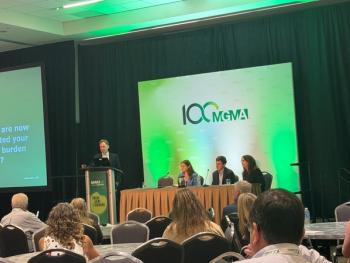

From payer contract homework to a 15-minute morning huddle, these are the moves practice administrators can make after four days of sessions and interviews at MGMA's centennial meeting.
MGMA acting CEO Akash Madiah on what members need, what the association must fix and how administrators can stop revenue leaks now.
When a medical practice calls MGMA these days, the question usually comes down to whether the math still works. Medicare pay is flat, costs keep climbing and prior authorization keeps turning simple tasks into multistep chores.
Akash Madiah, MBA, acting chief executive officer of the Medical Group Management Association (MGMA), sat down with Physicians Practice the week after the association's 100th Annual Conference in San Antonio to talk about what members are asking for, what MGMA still needs to fix and what administrators can do now to protect revenue. The conversation has been edited for length and clarity.
Madiah joined MGMA in 2018 as chief financial officer and has led the association on an acting basis since January. He
Akash Madiah: The biggest thing for all medical practices is how the math works from a financial standpoint. My colleague Anders Gilberg had a session at the conference, basically a town hall, where he talked about Medicare cuts and prior authorization. With the financial realities and cuts, how do you run an efficient clinic that can care for patients in a meaningful way? Prior auth is one aspect of an overburdened system, where there are many steps to something that should be really simple. They're calling about how we get advocacy for this and what our solutions are. Those are probably the biggest things.
Madiah: I think it changes everything, because I've been on the other side of this equation. I've been on the side of membership. I was using MGMA data to redo physician comp plans. So it gives me another perspective on what we're providing, whether it's data or anything else we give our members: How are they going to use this on Monday morning when they get to work, rather than just something we're cooking up in a lab here at MGMA? It's about putting ourselves in the member's shoes, so we're always providing the right solutions.
Madiah: A lot of engagement. I think about why people want to join the association in the first place, and it's really solutions and connection, where people can look to others in this industry to find a solution. Hopefully MGMA can provide that solution. But if we can't, or if we don't have the answer readily available, or it's a longer-term answer with advocacy in Washington, hopefully there's somebody else who has solved this problem, whether it's locally in their state or somewhere across our member spectrum.
A lot of the talk was about the things I just mentioned, like reimbursement and administrative burden. But it was also: How do I get more connected with MGMA? How do I volunteer, and how do I become part of the solution? That's what I always appreciate about our membership. There's no shortage of volunteers to help out, to be a mentor, to help the industry along, and I think that says something about the power of our membership.
Madiah: This year we did our first-ever member pulse survey and put out a member impact survey. The thing we're getting right is trust. What we're not getting right is that we need to make it easier for members to access what we do. That means from a digital perspective, from an education perspective and with local engagement as well. We're reengaging on all three of those. I mentioned in my opening remarks at the conference that the work is already underway.
Beyond those three things, we want to continually listen to our members and make sure we're reflecting their feedback, not just what I think is going wrong or what one of my colleagues thinks is going wrong. What are the substantive things we need to get right? You mentioned our data. Data, education, advocacy and the community: We do those things well. We can always do better, but those are the reasons people continue to invest in MGMA. Anything we're not doing right, we want to listen to that feedback and figure out how we can get better.
Madiah: That's not an easy question. In general, before you look for new revenue, make sure you're not leaking existing revenue. You've got to know your numbers: your provider productivity, your staffing ratios, payer performance, denial trends. You've got to know your own practice better than anyone. Then focus on revenue capture. Before adding volume, make sure you're collecting every dollar you've already earned.
Then invest time in your people. Turnover is really expensive, so make sure people are not burned out, to the best of your ability. It's not an easy thing for me to just say, but these are things you've got to pay attention to. Retention often provides a better return than recruitment.
Finally, don't try to solve these challenges in isolation. Benchmark against your peers. Learn from other organizations facing the same pressures. That's where MGMA can help. We have a lot of that benchmarking data.
Madiah: I've been here about eight years in various capacities, and about the last year in this acting CEO role. I'm very proud of where we've been, but I'm starting to think about the second 100 years. We need to make sure we're serving our members exceptionally well. They are the lifeblood of MGMA. It's a membership organization, and we have to prepare MGMA for the next generation of health care leadership. As I said on stage, our youngest attendee at the conference was 19, and our oldest, I think, was 76 or 79. So we have a wide spectrum, and we need to make sure we're serving all of it, from the new early careerists to the old veterans. Again, that means listening and figuring out the problems in every aspect of the business side of health care.
Our vision is to advance the business of health care. What does that mean? It means everything that's not touching the patient in a medical practice. That means evolving our data capabilities. I read one survey that said some of the biggest problems facing associations in general are member engagement and the digital experience, like modernizing systems. The great news is we started modernizing our systems in the last year and a half and put a lot of money into that.
There are three things we want to keep doing. The first is to put out good products, like our data product, and evolve them, because we want to provide practices the solutions they want. The second is to engage the members. That means something different to a lot of different members. For some people it means certification and learning what you need to do for this job, versus, "I just need the data to redo a physician comp plan or figure out how to staff my clinic."
The last one is industry leadership. We want to be recognized, through interviews like this one, as somewhere people want to go for expertise in the industry. That one's really important, because if we are a leading voice for medical practices, people will come to us. Our advocacy work in Washington never becomes easy, but it becomes easier because people recognize us as a leader, and that creates something for our membership you really can't quantify. We're working for our members behind the scenes and advocating for them in a way that hopefully will make their lives easier.
Madiah: I would say two things. One, pick the metric that matters most to your organization and review it every week. Start small. You've got to start somewhere. Figure out the metric that could really move your organization from good to great, and pick that.
The other thing I'd say is schedule one conversation with a peer outside your organization. Find them in the MGMA network, or find the clinic down the street, a system down the street or one in another state. Have that connection in this industry, because it's very rare that a problem you're facing isn't something somebody else has faced or is continually facing. Interacting in this industry can help move this forward, and that's really the power of MGMA and our membership. We want to hear about the problems affecting multiple organizations and figure out how we can help, whether it's a solution, advocacy or how we can better engage.
Madiah: I appreciate you asking these questions. We want to be there for our members, and we want to continue advancing the business of health care. Like at the conference, we're a group of peers who want to have each other's back, and the work our members do in medical practices is so important. I used to work in finance in a medical practice, so I was never touching the patient. That's what MGMA does. We're never touching the patient, but we want to make sure we're enabling physicians to work with their patients and give the best care. So what are the things we can take off their plate, and how do we run a clinic and a medical practice more efficiently?