
From payer contract homework to a 15-minute morning huddle, these are the moves practice administrators can make after four days of sessions and interviews at MGMA's centennial meeting.
The tools to catch heart failure early exist — now it's time to put them to work.
There are many challenges hospitals, providers and patients face today. Depending on who you ask, the answer to one central question — What is the most pressing problem? — will vary.
My family is from rural Kentucky, and growing up, heart failure played a starring role. As a child, it seemed like my grandfather was in the hospital every few months with an acute heart issue, followed by a few months of recovery between visits. That meant my mom, aunts and uncles were constantly in a state of worry, monitoring and chauffeuring. In my young and curious mind, I couldn't understand why there wasn't something that could prevent the next emergency.
With that context, people can understand why my answer to that question is: shift cardiac care from reactive to preventive.
In my
When my grandfather was in and out of the hospital with his cardiovascular issues, we didn't have the kinds of technology and tools that could have caught them early. But we do today.
So, in my slightly older (and still curious) mind, I know that addressing heart failure before it becomes acute can save lives and money — and have a significant impact on the challenges each of those aforementioned stakeholders is facing.
While the pieces — software, hardware and advanced signal processing — might be there, putting them together in our complex health care system tends to be the real challenge. I don't pretend to think a shift from reactive to preventive would be without obstacles, pain or pushback. But, as has always been the case across the country's health care system, we need to start taking steps in order to generate momentum and change.
Cardiologists play the central role in assessing and diagnosing heart failure. But with growing demand for their time, we need to find ways to enable them to focus on cases that require their specialized expertise and training — ensuring that patients who need them can be seen and treated accordingly. That opens the door for primary care physicians, nurse practitioners and advanced practice providers to help identify and filter those cases, so the right patients get in front of the right providers at the right time.
During a routine visit, patients receive a wearable device at check-in and wear it while filling out paperwork, through the intake process and while waiting to see the physician. In as little as 10 minutes, clinics can capture high-quality physiologic signals without significantly altering workflow.
The AI-enabled process surfaces insights that matter, rather than asking on-site providers to interpret raw signals or isolated readings. This makes it easier to spot early warning signs that wouldn't be obvious in a typical exam or single clinical indication. If the insights warrant a specialist visit, a patient gets routed to the right expert with data in hand to help inform the next diagnostic steps.
If the findings do not require a specialist visit right away, PCPs can take action through medication adjustment, diet and lifestyle changes, or close monitoring and follow-up.
When patterns are consistent with higher or worsening risk, PCPs can recognize when a patient may be nearing an acute episode and move quickly to escalate care. Referrals are now based on clearer, data-backed signals rather than uncertainty. PCPs can better determine who needs cardiology care now, who needs acute or emergency care, who can be monitored and who can stay managed in primary care.
Because referrals are more targeted, specialists see fewer low-risk patients and more patients who truly need advanced care. This improves access, reduces wait times and makes better use of limited specialty capacity.
We are poised to make significant leaps in the way we approach, diagnose, triage and manage heart disease — and eventually other preventable illnesses. While it won't happen overnight, every step forward is progress.
The role of primary care has always been critical, and will continue to be. With the right tools, innovation and processes, I believe we are approaching a future where heart failure no longer claims nearly one million lives each year and prevention becomes the norm, not the exception.
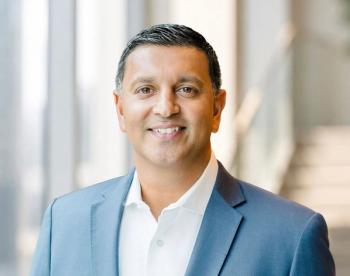
Chris Darland is president and CEO of