
From payer contract homework to a 15-minute morning huddle, these are the moves practice administrators can make after four days of sessions and interviews at MGMA's centennial meeting.
Cross-training, better staff meetings and role-playing can turn individual employees into a team that weathers shortages.
Just imagine it is Monday morning, and there’s a message left with the answering service that the receptionist and one of your medical assistants won’t be coming to work. Do you call a temp agency that will send you someone who has never worked in a medical office and is unfamiliar with your scheduling process? Do you try to make do with your existing staff while wreaking havoc on your schedule? Do you call patients to reschedule and only see those deemed necessary and urgent?
None of these options is attractive and will likely cause stress on the existing staff and problems with patient care. The best answer is to anticipate this situation of absent employees by cross-training staff so they can work in other positions. This allows the full patient schedule to be seen without delays or disruptions, so patients are unaware of the staff shortage.
While all practices, especially small ones, benefit from cross-training, the underlying issue is the growing shortage of medical staff. It’s due in large part to
The fallout erodes the morale of the remaining employees, increasing their likelihood of leaving. Of course, you don’t want either.
You need your employees to be, and see themselves as, part of a cohesive team. Teams stick together, whereas individual players tend to leave. Teams don’t form because they work in the same medical office; they must be built by you.
Team building is the art of turning diverse individual employees into a team of people who work together to meet their shared objective, which in a medical practice is excellent patient care. The key to team building is fostering bonds of respect among individuals, despite their differences, to accomplish the team’s goals.
The glue of a team is that its members have expectations of each other. A cohesive team can sail through staff shortages and other difficult issues. When employees know they are part of a team, employee morale is rarely a problem.
The term “team” is widely used in business and medicine today. Unfortunately, just saying you are a team does not make it true. In fact, just talking the talk can turn employees off. The following are elements I have used to build a true team in my medical practice.
The three types of staff meetings:
Staff meetings are held more often when there are problems or when new programs are introduced into the practice. When organizing staff meetings, keep the following points in mind:
In most health care practices, staff experience many positive events and circumstances. Sharing those positive comments and compliments with all the staff is important. At the beginning of a staff meeting, ask everyone to share compliments from patients or a positive incident that occurred since the last meeting. Such incidents might include successfully dealing with a difficult patient, new uniforms, or an employee receiving an award.
I suggest starting the meeting with these comments to create a positive atmosphere and avoid it becoming a gripe session.
Another suggestion is to ask everyone to contribute one idea to improve the practice. Reward implemented ideas either verbally or monetarily, especially if the idea saves costs. Remember to avoid criticizing any of the staff’s suggestions. If you do, you will stifle future creativity. Remember to remain open to these suggestions and avoid defensive commentary. It is also important to remind staff members not to raise any person-specific complaints in a forum such as this and to provide them with details on the appropriate way to do so.
Creating a positive atmosphere is a prerequisite for creativity. If your team members aren’t happy, engaged and satisfied with their work, your practice won’t achieve the best patient outcomes. This also impacts patient satisfaction and your online reputation.
Have you considered how your patients feel and what they experience when interacting with your practice? What is it like when you have difficulty lifting your hand above your head? How does it feel when you’re recovering from a heart attack? Looking through the lens of a patient can be very helpful for identifying the provider-patient encounter from the patient’s perspective.
Role-playing is another technique for enhancing morale within the practice. For example, one staff member can assume the role of an angry patient calling to complain about a bill, while another employee can try to calm the patient and resolve the issue. The rest of the staff can critique the dialogue.
Another example is a senior citizen simulation for your younger staff members to understand the limitations and challenges older patients face when navigating a medical practice.
A middle-aged team member is converted into a senior citizen by 1) making her hard of hearing by placing a cotton ball in each ear, 2) impairing her vision by giving her glasses that distort the reading material, and 3) making her arthritic by having her wear gloves and immobilizing one leg with a splint.
Before the staff meeting, this role-playing senior citizen enters the office, signs in at the reception desk, reads some of our patient education material, and sits in one of the chairs in the reception area.
The team member then returns to herself, and we start the staff meeting. She explains that she had trouble reading materials in our reception area and that she had difficulty getting into and out of the chairs there. She also had difficulty using the doorknobs to open the restroom and exam room doors. Finally, she had trouble hearing the receptionist in the office.
What did we learn? We learned that the font size on our print material in the reception area was too small. We discovered that most of the chairs in our reception area and the exam rooms were not senior-friendly. We learned that one staff member may need to help seniors with their paperwork due to difficulty with fine motor skills, such as writing. We also added rubber door handles to help seniors open doors.
But most of all, we increased the entire staff’s sensitivity to the unique concerns of the elderly and to how we might provide better care for them.
Bottom line: There is a strong correlation between employee well-being, productivity and performance. Employees report that team-building exercises boost morale, increase connectivity and communication among employees, enhance productivity and creativity, and ultimately improve patient satisfaction and the practice’s online reputation. Besides, it’s fun and inexpensive, and we all know that health care needs an injection of fun. Happy workers tend to go the extra mile for their patients.
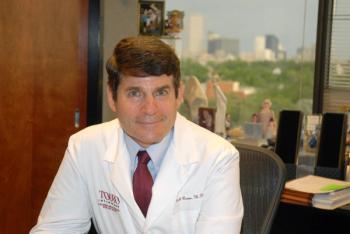
Neil Baum, M.D., is a professor of clinical urology at Tulane University in New Orleans. Baum is the author of several books, including the best-selling book “Marketing Your Medical Practice-Ethically, Effectively, and Economically,” which has sold over 225,000 copies and has been translated into Spanish.