
From payer contract homework to a 15-minute morning huddle, these are the moves practice administrators can make after four days of sessions and interviews at MGMA's centennial meeting.
Most physicians know the direct primary care pitch; whether the economics hold up once you're in it is the harder question.
Direct primary care has been around long enough that most physicians know the pitch: drop the billing, charge a monthly membership, keep a smaller panel and spend real time with patients. What takes longer to answer is whether the economics hold up once you're in it.
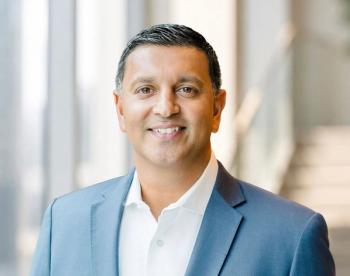
Josh Umbehr, M.D., co-founder of
Don't miss our recent episodes on
Music Credits:
Distant Memories by Buurd -
A Textbook Example by Skip Peck -
Editor's note: Episode timestamps and transcript produced using AI tools.
0:00 – 0:22 | Cold open Umbehr on putting the hospitality back in health care, and spending more on waiting-room coffee than on EKGs.
0:22 – 1:44 | Introduction Austin Littrell introduces the episode and Josh Umbehr, M.D., co-founder of Atlas MD.
1:44 – 3:40 | How Umbehr found direct primary care Billing and coding for a plastic surgeon in undergrad, a father whose simple trash-hauling business shaped how he saw the work, and a decade watching the early insurance-free and concierge movements before going all in.
3:40 – 6:38 | The basic math of a DPC practice Why it is simpler than physicians expect: roughly 600 patients at $50 a month across 12 months, 20% to 25% overhead, one staff member for every one to two physicians, and most of the revenue landing as income.
6:38 – 8:11 | Panel size, and why bigger isn't the goal Concierge's 200-patient panels were built for high fees; the DPC math rewards a fair price across a larger panel, right-sized to what one physician can handle in a day.
8:11 – 11:18 | Setting prices and the good-better-best tradeoff Pricing against what hospitals earn per physician, how a partner can nearly halve overhead, and why the clinics that push prices highest often struggle to grow while the affordable ones fill up.
11:18 – 13:50 | What low overhead actually looks like The shoestring-and-stethoscope start, an EKG and vitals machine over a billing department, and 700 to 1,000 square feet with one room and one staff member once a practice is full.
13:50 – 17:38 | Specialists, imaging and hospitalizations Keeping patients out of the system when possible, $30 doctor-to-doctor dermatology consults in a day or two, cash-pay imaging scheduled same day, and how paying cash can make a patient a better customer.
17:38 – 18:47 | P2 Management Minute Keith Reynolds shares practice management tactics and invites listeners to submit their own workflow ideas.
18:47 – 22:31 | The honest timeline and runway to convert Best case, a converting practice recruits 200 to 300 patients before the switch; 40 to 50 new patients a month means full and profitable within a year, while 10 to 20 a month stretches the ramp past two years.
22:31 – 26:38 | What AI changes about primary care AI as a tool that decreases the work of work, open-evidence lookups cutting referral volume, and why offloading documentation frees physicians for the parts of care that build trust.
26:38 – 29:42 | The biggest misconceptions physicians have The fear that DPC demands business genius or means abandoning lower-income patients, the pill-mill stigma around cash pay, and Umbehr's case that a physician's duty to do no harm should extend to doing no financial harm.
29:42 – 32:34 | How patient relationships change in DPC With no seven-minute visit and no staff buffer, hour-long conversations backed by calls, texts and emails, and why transparency turns a patient's default distrust into trust.
32:34 – 34:18 | Where DPC is headed, and 'peak insurance' Umbehr's prediction that insurance-free primary care becomes the default within three to five years, the 2026 rise in patients dropping coverage mid-cycle, and why he thinks the break comes fast.
34:18 – 36:54 | Closing thoughts and outro Umbehr on how much room is left to innovate, from hospital-at-home to physician-run outpatient care, and why he expects more change in the next five to 10 years than the last 20 or 30. Littrell wraps the episode.