Six national physician organizations warned that claims of AI superiority undermine patient trust, putting new attention on how practices set rules for AI use by clinicians and staff.
Rebecca Schoon, Ph.D., who helped lead the Oregon arm of a national moral injury report, explains how visit quotas, noncompete clauses and prior authorization feed the distress costing practices their physicians.
In a national survey of more than 1,200 practicing physicians, 27% said they had already left a job because of moral distress, and 25% said they were considering leaving their current one. Rebecca Schoon, Ph.D., one of the authors of the Physicians for a National Health Program report behind those numbers, points to visit quotas, noncompete clauses, prior authorization and paperwork as sources of that distress.
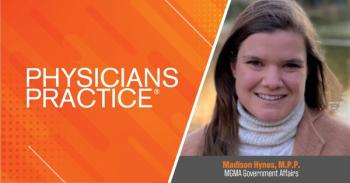
Medical Economics Senior Editor Richard Payerchin sat down with Schoon, an associate professor of public health at
Schoon describes what followed Optum’s acquisition of Oregon Medical Group in Eugene, including the two-year noncompete clauses she says kept departing physicians from practicing in the area. She also explains how management services organization arrangements let corporate owners control hiring, firing and staffing schedules at practices a physician technically owns. From there she covers Oregon’s 2025 law restricting those arrangements, the state’s effort to design a universal health care plan, and what patients told researchers about appointments limited to a single health issue and longer waits for specialists.
The full report,
Health Care for All Oregon also has started the
Don’t miss our recent episodes on
Cup of Coffee by Ionics -
A Textbook Example by Skip Peck -
Editor’s note: Episode timestamps and transcript produced using artificial intelligence (AI) tools.
0:00 – 0:29 | Cold open Schoon on what patients in Oregon’s focus groups said about their physicians.
0:29 – 1:52 | Introduction Austin Littrell introduces the episode and the guest, with an update on the Universal Health Plan Governance Board’s deadline.
1:52 – 3:12 | Meet Rebecca Schoon Richard Payerchin welcomes Schoon, who teaches health policy and health systems at Pacific University and works on policy reform with Health Care for All Oregon.
3:12 – 5:38 | How the study came together Physicians for a National Health Program paired a national physician survey and focus groups with an Oregon case study and patient focus groups run by Health Care for All Oregon, with funding from the Robert Wood Johnson Foundation. Schoon defines moral injury as the tension between clinicians’ ethical obligations and the for-profit constraints of the current system.
5:38 – 8:24 | Financialization comes to Oregon Optum’s acquisitions of Oregon Medical Group in Eugene and The Corvallis Clinic, the physician resignations and two-year noncompete clauses that followed, and deals by Amazon and private equity firms for clinics in Portland, Bend and Redmond.
8:24 – 12:22 | How Oregon pushed back Oregon’s corporate practice of medicine ban dates to a 1947 state Supreme Court ruling, but corporate owners found ways around it, most recently through management services organizations. Schoon describes how Health Care for All Oregon worked with state Rep. Ben Bowman (D-Oregon) on the 2025 law that has been called the strictest in the nation, which also limits noncompete clauses.
12:22 – 15:04 | Moral injury in independent practice Physicians in corporate settings are bound by limits set by management services organizations. In independent practices, Schoon says moral injury comes more from prior authorization, denials, step therapy and paperwork.
15:04 – 15:56 | P2 Management Minute Keith Reynolds shares practice management tips and invites listeners to submit their own workflow ideas.
15:56 – 19:39 | Oregon’s path to universal health care A 2019 legislative task force, the 2022 ballot measure that added access to health care to the state constitution as a fundamental right and the nine-member Universal Health Plan Governance Board designing the plan. The board has since moved its September deadline to Dec. 1.
19:39 – 23:05 | Paying for it Draft options include income, payroll and corporate taxes. Schoon argues most Oregonians would save compared with what they pay in premiums, deductibles and copays. She contrasts billing in countries with universal health care, which she says takes seconds, with the months an American practice can spend chasing a single payment.
23:05 – 28:15 | What patients told researchers Appointments limited to one health issue, longer waits after specialists left the Eugene area, repeated denials that took a psychological toll and patients who sympathized with doctors whose hands were tied.
28:15 – End | Closing thoughts and outro Payerchin thanks Schoon, and Littrell wraps the episode.