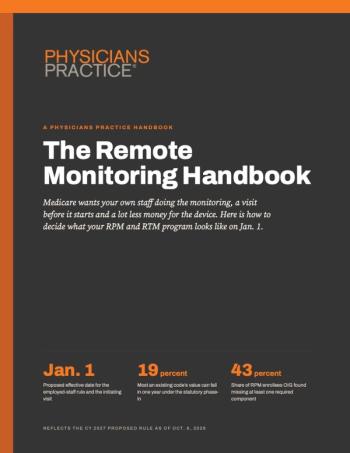
A 2027 Medicare proposal would stop paying for RPM time logged by vendor staff and cut device payments. Our handbook walks through what to do.
As AI takes on a larger role in clinical decision-making, the diagnostic coding system underpinning health care data may be too imprecise to keep patients safe.
When the United States finally transitioned from ICD-9 to ICD-10 in October 2015, the
The jump from roughly
A decade later, that concern looks almost quaint. The problem we face today is not that ICD-10 is too detailed; it is that ICD-10 falls far short of the clinical specificity that AI demands to consistently support safe and effective care.
As the industry leans further into AI-assisted decision-making, a critical blind spot is emerging: the diagnostic codes that underpin nearly every clinical and financial transaction in health care were never designed to support the clinical precision AI requires.
ICD-10 codes were built primarily as a classification and billing framework. They serve an important administrative function, enabling providers to document encounters, submit claims and receive reimbursement. The reality is that many ICD-10 codes function more as diagnostic categories than precise clinical descriptors. That distinction matters enormously when AI systems are expected to support, or even help drive, clinical decisions.
Consider a straightforward example. The CPT code for amputation of a lower limb (27880) does not differentiate between the left leg and the right leg without an optional modifier. A billing system will process that code without issue. When that modifier is missing, incomplete or lost in translation across systems, an AI tool relying on that data lacks the information needed to determine which limb requires intervention.
Another example is ICD-10 code C71.9: malignant neoplasm of the brain, unspecified. These can encompass conditions as diverse as a glioblastoma, which carries a median survival of roughly 15 months, and an operable low-grade astrocytoma, with a far more favorable prognosis. While clinically distinct diseases demand entirely different treatment approaches, the coding system can represent them identically.
Such scenarios are already occurring in health care systems today, reflecting how AI tools consume and act on diagnostic data without recognizing what is missing.
For decades, the gap between billing codes and clinical reality was a manageable inconvenience. Clinicians compensated with institutional knowledge, chart review and direct communication. Surgeons drew marks on the correct limb by hand before an operation precisely because the data systems could never be trusted to make that distinction on their own. AI changes the equation. Algorithms lack the benefit of hallway consultations, bedside verification or years of contextual experience. They operate on the data they are given, and when that data is limited to broad diagnostic categories, outputs are only as precise as their inputs.
This challenge extends beyond patient safety into several other high-stakes areas. Precision medicine depends on linking diagnoses to genetic variations, biomarkers and targeted therapies, and broad diagnostic categories simply cannot support that level of specificity. Similarly, clinical trial matching requires granular phenotyping to connect the right patients with the right studies. Without detailed clinical data, patients may be excluded from research that could benefit them.
The pressure is building on the financial and regulatory side as well. Risk adjustment and quality reporting increasingly demand specificity, and CMS is moving toward models where unspecified codes lose value. The FY 2026 ICD-10-CM update, for example, introduced nearly
Meanwhile, interoperability frameworks driven by TEFCA and the expanding QHIN ecosystem depend on structured, clinically meaningful data to deliver on the promise of seamless information exchange. Broad codes traveling between systems carry the same limitations regardless of how efficiently they are transmitted.
When systems produce outputs based on diagnostic categories that fail to differentiate between clinically distinct conditions, the liability exposure is significant for AI developers, health systems and clinicians alike. The path forward demands that AI-enabled systems be built on data foundations that reflect the full clinical picture, rather than just the subset of information required to process a claim.
Health care needs an approach to clinical data that treats diagnostic specificity as foundational rather than optional. The first step is abandoning the mindset that a billing code sufficiently represents a patient's condition. Beyond that, the industry must invest in clinical knowledge architectures that capture the relationships between diagnoses, symptoms, treatments, genetics and outcomes at the level of detail AI requires to function responsibly.
Validation and clinical reasoning should be embedded into AI workflows as a core design principle, ensuring that data is evaluated for clinical completeness and consistency before it is saved, shared or acted upon. When data enters the medical record, whether from ambient listening tools, NLP engines or manual entry, it should be evaluated for clinical completeness and consistency before it is saved, shared or acted upon.
The irony is hard to miss. A decade ago, segments of the industry fought against the granularity of ICD-10, convinced it was more detail than anyone would ever need. Today, that granularity is the floor, not the ceiling. The organizations that will lead in the next phase of health IT will be those ensuring that every AI-driven interaction is grounded in clinically specific, evidence-based, trustworthy data.
The conversation about AI in health care has rightly focused on what these tools can do. It is time to focus equally on what they need: data precise enough to protect patients, support clinicians and deliver on the transformative promise of intelligent care.
David Lareau is president and CEO of