Staff raise budgets are tight for 2027, and turnover still costs more. Our new handbook shows how to price roles, fix compression and keep staff.
Two Physicians Foundation experts on why where a patient lives may shape health more than the care received and what physicians can do about it.
Social drivers of health (SDOH) — food security, housing stability, transportation, utilities access and interpersonal safety — account for roughly 80% of what determines whether a patient stays healthy or gets sick. Yet most of the health care system is still organized around the 20%: treating illness after it arrives.
Medical Economics Senior Editor Richard Payerchin speaks with Dhruv Khullar, M.D., M.P.P., a practicing physician and associate professor of health policy and economics at Weill Cornell Medical College who directs the
Don’t miss our recent episodes on
Music Credits:
Morning Coffee by Keyframe Audio -
A Textbook Example by Skip Peck -
Editor's note: Episode timestamps and transcript produced using AI tools.
0:00 – 0:25 | Sponsor message
0:25 – 0:52 | Cold open Dr. Khullar on the moral injury clinicians feel when they can identify a patient's social need but cannot meet it.
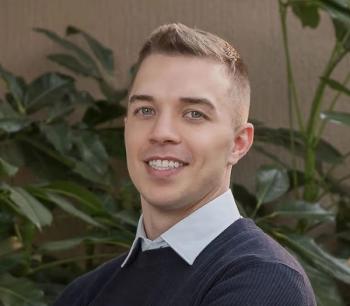
0:52 – 1:44 | Introduction Austin Littrell introduces the episode and both guests.
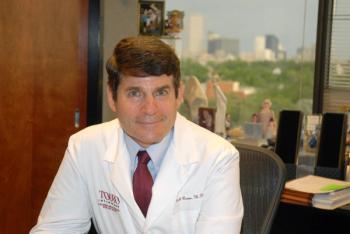
1:44 – 5:06 | Meet Paul Harrington Harrington introduces himself as a former Vermont legislator, U.S. Senate health policy director and longtime Physicians Foundation board member, and explains how a foundation-commissioned study by Dr. Buzz Cooper reframed health care spending as a demand-side problem — and drew the foundation into SDOH.
5:06 – 9:02 | SDOH is not a rural problem or an urban problem Palm Beach County data shows a 16-year life expectancy gap between two zip codes 10 miles apart. Harrington argues that access to food, transportation, safe housing and economic opportunity — not geography — determines whether a patient thrives.
9:02 – 11:36 | What works on the ground Three examples from the foundation's grant program: a Rush University cardiology program that places residents in food shelves to understand what their patients face outside the clinic; a Wichita, Kansas initiative embedding SDOH screening into electronic medical records and tracking whether identified needs are actually being addressed; and North Carolina's Medicaid managed care model, which improved health outcomes by adding food vouchers, housing support and transportation to the care contract.
11:36 – 12:27 | P2 Management Minute Keith Reynolds shares practice management tips and invites listeners to submit their own workflow ideas.
12:27 – 13:46 | Meet Dr. Dhruv Khullar Dr. Khullar introduces himself as a practicing physician and health services researcher at Weill Cornell Medicine, where he directs the Physicians Foundation Center for the Study of Physician Practice and Leadership. The center focuses on incentives in health care, value-based payment, consolidation, physician well-being and the social needs of patients.
13:46 – 16:18 | The science behind SDOH SDOH is not a new idea or a trend — the evidence that social and community factors shape health outcomes, by some measures more than the care delivered in clinics and hospitals, is well established. The open challenge is not validation but intervention: once a social need is identified, what actually works to address it?
16:18 – 18:17 | The five core drivers of health Food security, housing stability, transportation access, utilities access and interpersonal safety. Dr. Khullar identifies food insecurity as the broadest challenge facing the most patients and unstable housing as the most individually devastating.
18:17 – 20:17 | The screening gap Community resource partnerships work — when they exist. The problem is that many communities lack those resources, leaving screening without the infrastructure to act on it. Going forward, the priority is aligning payment and policy to incentivize health systems to meet social needs, not just clinical ones.
20:17 – 21:46 | The SDOH billing codes and why physicians aren't using them The Physicians Foundation was instrumental in establishing billing codes that allow physicians to document patients' social needs. Adoption has been slow because awareness remains low — and because adequate reimbursement is still needed to create a durable incentive to use them.
21:46 – 23:25 | How to talk about SDOH with patients Empathy first. Dr. Khullar describes building the kind of trust that makes patients comfortable disclosing a housing or food problem — and argues that doing so matters not just for patient outcomes but for the sustainability of the workforce, which bears real moral weight when needs go unmet.
23:25 – 25:28 | Reaching beyond the clinic Dr. Khullar's three-part framework: identify who needs help through relationship-building and, carefully, AI-assisted screening; build durable relationships with community organizations over years and decades; and push for adequate public funding of social services, because screening and referrals can only go so far without a functioning safety net behind them.
25:28 – 27:10 | The case for investing upstream Both primary care and social services carry the same logic — large upfront investment, enormous long-term return. Dr. Khullar argues the case is both financial and moral: the political and social will to act is the only thing missing.
27:10 – 29:57 | State policy and how physicians can get involved States are laboratories for SDOH policy, and Harrington argues that elected officials actively want physician input. Working through state medical societies is the most direct path — legislators seek out physicians during recesses, and when physicians show up, they are heard.
29:57 – 31:15 | Dr. Khullar's message to primary care physicians Primary care is harder year over year, and unless health care financing, administrative burden and social support infrastructure change substantially, the workforce is at risk. Dr. Khullar calls this one of the most important issues in health care reform.
31:15 – 33:21 | Paul Harrington's message to primary care physicians Primary care physicians are the bedrock of American health care — underappreciated and underfunded. Harrington closes with a direct thank-you, a tribute to rural physicians embedded in the fabric of their communities and the Physicians Foundation's commitment to make the work of addressing social drivers of health easier, not harder, for the physicians doing it every day.
33:21 – 33:42 | Closing thoughts and outro Payerchin thanks both guests and wraps the interview portion of the episode.