


Current HIPAA regulations are prohibiting provider-to-provider communications and, in turn, hurting both patients and physicians.
Current HIPAA regulations are prohibiting provider-to-provider communications and, in turn, hurting both patients and physicians.
Getting paid at your medical practice is may get harder - so why not give patients payment information in advance?
While EHR adoption continues to increase, there are significant hurdles left to overcome, and the healthcare industry has a long way to go to catch up.
Today's EHRs are little more than glorified data collection devices, making meaningful clinical use difficult or impossible without more information.
Addressing the privacy and safety concerns of mobile medicine should be as important as accessibility for today's medical providers.
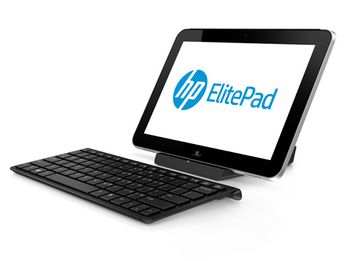
A cheat sheet (and comparison guide) to the best tablets for docs.
Trust is an essential element of medicine. Trust is also an important consideration when dealing with computers, data, and information.
The latest statistics in the Physicians Practice Technology Survey indicate some surprising insights on EHR adoption among medical practices.
Those in healthcare get so excited about the data, especially "big data," that they come to believe that data elements have some intrinsic value, but they don't.
The NSA appreciates the importance of context. Do you? Does the EHR at your medical practice?

Here's a handy infographic on EHR adoption among private practice physicians, including data on certified EHR systems and meaningful use attestation.
The best way to approach all medical records in relation to HIPAA and the HITECH Act is the same as you do with patients: use universal precautions.
Plainly put, the "data" in an EHR, especially the coded values, are not and cannot be informative in the way a narrative record can.
Interoperability is the healthcare buzzword of the moment, but let's look at the word, what it means, and what we are truly trying to achieve in health IT.
EHRs can indeed reduce costs and improve patient care, but they can also provide legal issues if the rules for their use are ignored.
Robert Anthony, a health specialist with CMS, explores key differences between Stage 1 and Stage 2 requirements for meaningful use in this webinar recorded June 4, 2013.
Even following the HIPAA Security Rule, which requires protecting computer systems with anti-virus and anti-spam, computers can still get infected. Why is that?
Medicine needs a conceptual framework that addresses, in a coherent, coordinated way, the wide variety of requests that arise as we care for patients.
One of the anticipated costs of EHR implementation is helping those who are struggling to adapt, most notably older providers.
Which tools are your medical practice peers buying and how are they using them? Our 2013 Technology Survey has the answers.
Which tools are your peers buying and how are they using them? Our 2013 Technology Survey has the answers.
Chances are your medical practice uses e-mail every day. But here's how it works and how to find the right fit for your office's operations.
Training may be one of the biggest barriers to full EHR buy-in from clinicians, study says.
Chances are good that you have some major ticking software time bombs lurking in your medical practice's computer environment, namely Windows XP and Server 2003.
Physicians have medical information in their mind, but the EHR cannot access it, so the unhappy task of extracting data from information falls on providers.