






The law requires patients have access to their medical records in a timely fashion and at a nominal fee. Is your practice in a position to comply?
The law requires patients have access to their medical records in a timely fashion and at a nominal fee. Is your practice in a position to comply?
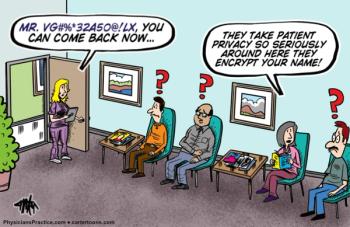

Seeing patients and their relatives creates additional HIPAA considerations but ultimately improves patient care.

A recent HIPAA fine and HHS’s healthcare app guidance underscore the importance of conducting risk analyses to protect personal health information.

Is your practice compliant with the Eliminating Kickbacks and Recovery Act of 2018 (EKRA)? If you don't know what EKRA is, you are not alone-and that is part of the problem.

Nosy employees poking around in medical records or sharing passwords can put your practice at risk of HIPAA violations, lawsuits, and broken agreements with affiliate hospitals or practices.

As patients increasingly rely on the internet to determine which provider is best for them, online reviews play a critical role in the success - or failure - of modern medical practices.

Current events once again illustrate the wide range of legal and physical threats to physicians' assets.

Don’t feel attacked by negative online reviews or strung out by false reviews. Learn what your legal options are, then fight back.

The legality of caring for minor patients once they turn 18.

Lax policies regarding medical records and ordering prescriptions and tests puts physicians-and their practices-at risk of DEA and HIPAA violations.

A trend to watch: Last year, two states made significant changes to laws related to personally identifiable information and protected health information.

Physicians who write a script for themselves, or their friends and family, risk a suspended license-unless they have a record of proper documentation.

A look over the Office for Civil Rights’ recent HIPAA actions reveal why privacy and security safeguards are a must for medical practices.

Although physicians may not be involved with the cybersecurity of medical devices, they are still obligated to comply with HIPAA and the HITECH Act.

Proper billing and coding under CMS’s final rule is important not only for reimbursement but also to avoid potential lawsuits.

Insurance giant Anthem was recently tagged with a $16 million-dollar HIPAA penalty. What can you do to keep your solo or small practice from getting hit?

Following the Anthem settlement, the Fall 2018 Unified Agenda of Regulatory and Deregulatory Actions doubles down on HIPAA privacy and enforcement efforts.
The suspension of a New York nurse highlights the intersection between HIPAA and trade secrets.

Legal insights from both sides of the aisle about what to do when protected health information (PHI) has been disclosed or when law enforcement requests it in a legal proceeding.

Despite express prohibition regarding the use and/or the sale of PHI by unauthorized individuals, doctors and companies still did it-and paid.

A recent case in New York shows physicians how expensive a major data breach can be from a financial, reputational and legal standpoint.

Regardless of the level of technology available, paper still matters in healthcare.

Technology is blurring healthcare's privacy lines. There's no better example of this than a tech-savvy adolescent reaching out to a physician for medical help.
It's always important to be on top of HIPAA requirements, here's what physicians need to know for 2018.