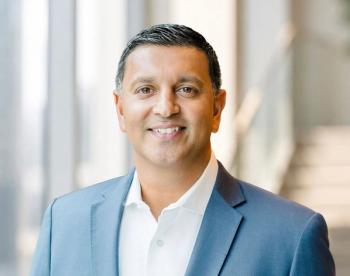
MGMA acting CEO Akash Madiah on what members need, what the association must fix and how administrators can stop revenue leaks now.
Nearly 1 in 4 licensed doctors is 65 or older. Few hospitals screen them, and practices often have no checkpoint at all.
Nearly 1 in 4 U.S. physicians with an active license is 65 or older, and only a sliver of hospitals check whether their oldest doctors are still fit to practice.
The issue got fresh attention Oct. 12, when The Washington Post
Neil Baum, MD, professor of clinical urology at Tulane University and a longtime Physicians Practice contributor, has warned about the opposite mistake. In
Both points are true at once, and the research on hospital screening programs shows how hard it is to honor both.
Late-career practitioner policies remain rare. A University of Washington team that reviewed 29 hospital policies and interviewed 21 executives who built them estimated the programs exist in fewer than 5 percent of U.S. hospitals, according to
Every policy used age to trigger screening, with a median starting age of 70. Most required a physical exam (89 percent) and a neuropsychological exam (82 percent), and 79 percent asked the examiner for an overall judgment of fitness to practice. Early reports found 12 to 14 percent of screened physicians were deemed unfit.
"The vast majority of late-career physicians were found safe to continue to practice," said lead author Andrew White, MD, a general internist and professor at the University of Washington School of Medicine. Policies that won medical staff buy-in landed better than those announced from the top down.
Fairness is the weak spot. Fewer than one-fourth of the policies clearly defined standards for restricting privileges, appeal rights or access to legal representation, according to
The authors recommend involving physicians early in policy design, screening every specialty starting at 70, using validated tests benchmarked against healthy, high-performing physicians rather than the general population over 70, spelling out appeal rights and trying accommodations such as schedule changes, lower-risk patient panels or teaching roles before restricting privileges.
"Patient safety must come first, but we also need to treat physicians fairly," Gallagher said.
Hospital screening kicks in when a physician seeks or renews clinical privileges. An office-based physician in an independent group may never hit that checkpoint, which leaves the question to partners and administrators who often have no process and a personal relationship with the colleague in question.
Baum's column offers a starting point. He noted that many physicians already adjust on their own by dropping night call, shifting to outpatient work, mentoring younger colleagues or giving up highly technical procedures. "These adaptations reflect professionalism and not failure," he wrote. He urged organizations to build formal mentoring programs, phased retirement options, teaching roles and flexible schedules so senior physicians can stay engaged as their abilities change.
Baum also argued that medicine already has the tools to judge competence, including continuing medical education, board certification, peer review, outcomes monitoring and credentialing, and that those checks should apply the same way at every age.
For practice leaders, that points to a few moves worth making before anyone is in the hot seat: write late-career transitions and phased retirement into partnership and employment agreements, run peer review and outcomes data for every clinician rather than singling out the oldest ones, and talk about career stages openly. Baum walks through those stages, from launch to the legacy years, in
With nearly a quarter of licensed doctors already past 65 and the NEJM authors pushing for screening at 70 across all specialties, more practices will face the question soon, whether or not a hospital asks it first.