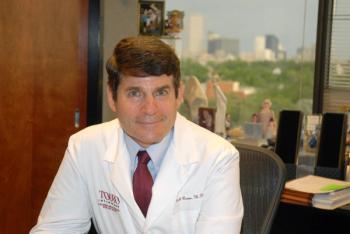
Experience is one of medicine's most valuable resources. Neil Baum, MD, argues physicians should be judged on competence, not age.
Experience is one of medicine's most valuable resources. Neil Baum, MD, argues physicians should be judged on competence, not age.
A 72-year-old internist with more than 40 years of experience walks into the physicians' lounge. He has managed thousands of complex cases and mentored generations of young physicians. As he sits down, a younger colleague smiles and asks, "Are you still practicing?" A few moments later comes another familiar question: "When are you planning to retire?"
If you are a middle-aged or older physician, you have probably experienced a similar conversation. Although usually well intentioned, these questions often reveal an underlying assumption: that advancing age necessarily means declining competence. This article explores the challenges older physicians face and the loss to medicine when experience is quietly marginalized.
Ageism refers to stereotypes, prejudice or discrimination based on a person's age. In medicine, ageism influences not only how physicians care for older patients but also how physicians themselves are perceived as they grow older.
Unlike many professions, medicine depends heavily on judgment, pattern recognition, communication, emotional intelligence and experience. While certain physical abilities may decline with age, clinical wisdom often continues or even expands. Yet one of the most persistent myths in medicine is that advancing age inevitably means declining competence.
Ironically, patients often seek physicians with decades of experience. They value the surgeon who has performed thousands of procedures or the internist who has "seen it all." Older physicians may encounter subtle questions about retirement plans, increased scrutiny of clinical performance or assumptions that they cannot adapt to electronic health records, artificial intelligence or evolving technologies.
The relationship between physician age and quality of care is more nuanced than stereotypes suggest. Some studies suggest that, on average, physicians who do not remain engaged in continuing education or quality improvement may experience declining performance. Other studies demonstrate that experience improves diagnostic accuracy, clinical judgment, communication skills and the ability to recognize uncommon disease presentations.
The real issue is not chronological age; it is competence. Medicine already possesses mechanisms to evaluate competence through requirements for continuing medical education, board certification, peer review, monitoring outcomes and credentialing. These assessments should apply consistently regardless of age. The take-home message is that competence, not birthdays, should determine whether physicians continue practicing.
Physical stamina may decrease with age. Night call becomes more taxing. Fine motor skills may change for procedural specialists and surgeons. New technologies require continual learning. Cognitive processing speed may slow, even when clinical judgment improves. Many physicians voluntarily modify their practices by reducing call schedules, focusing on outpatient care, mentoring younger colleagues or limiting highly technical procedures while continuing to contribute meaningfully. These adaptations reflect professionalism and not failure.
Retirement from clinical practice does not necessarily mean retirement from medicine. Many retired physicians possess decades of expertise that continue to benefit the profession through teaching, mentoring, writing, coaching, quality improvement, ethics committees, volunteer work, humanitarian missions and leadership.
Consider the retired physician who mentors residents in communication skills or the senior physician who helps young doctors navigate difficult conversations with patients and families. Another example is the older surgeon who no longer operates but coaches younger surgeons in operative judgment and complication management.
Ageism is not only external. Many physicians internalize society's attitudes toward aging. Some doctors may doubt their value because they have reached a certain birthday. Others feel guilty about reducing their workload despite decades of dedicated service. Still others come to believe that retirement means becoming obsolete or no longer needed.
Let's not forget that a physician's value extends beyond the examination room or the operating room. A physician's experience remains one of medicine's most precious resources.
Health care organizations can reduce ageism by embracing physicians at every career stage. Young physicians contribute energy and fresh perspectives. Mid-career physicians often combine expertise with leadership. Senior physicians contribute wisdom, judgment and mentorship.
A healthy practice or hospital should intentionally foster collaboration with older physicians. Health care organizations should develop formal mentoring programs, phased retirement options, teaching opportunities and flexible practice arrangements that allow senior physicians to remain engaged while adapting their responsibilities to changing abilities. This approach and attitude benefit everyone.
Every physician will eventually join the ranks of older physicians. Ageism is therefore not unique among biases: if we live long enough, it affects us all. The young resident who assumes an older physician cannot master the EMR or artificial intelligence may one day hope younger colleagues respect their own decades of experience. The younger partners who quietly wonder whether an older partner should retire will eventually face the same situation.
Artificial intelligence is changing medicine, but it is unlikely to replace the seasoned clinician. AI can summarize records, identify patterns and suggest differential diagnoses. It cannot reassure an anxious patient, recognize the subtle clues that come only from decades of experience or exercise sound judgment when the "right" answer falls outside the algorithm. The future of medicine belongs not to AI alone, nor to physicians alone, but to physicians who know how to use AI wisely. In many ways, experienced physicians are uniquely positioned to recognize when artificial intelligence is helpful and when it is wrong.
Medicine has always valued evidence over assumptions. Ageism, unfortunately, asks younger physicians to abandon that principle, substituting stereotypes for individual assessment. Yes, it is true that some physicians should retire earlier because of declining competence. Other older physicians remain exceptional clinicians well into their 70s and beyond. As physicians, we should celebrate lifelong learning, objectively evaluate competence, support career transitions with dignity and continue valuing the immense contributions of older physicians long after they leave full-time clinical practice. Medicine should never confuse gray hair with diminished ability. Experience doesn't become obsolete; it becomes indispensable. Medicine should judge physicians by their competence, not by the date on their birth certificate.