Experience is one of medicine's most valuable resources. Neil Baum, MD, argues physicians should be judged on competence, not age.
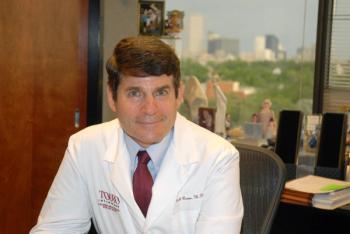
Robert Cain, D.O., discusses the rapid growth of osteopathic medicine and why its whole-person philosophy is more relevant than ever.
Osteopathic medicine has grown from a single school in the 1890s to 73 campuses across 36 states, now accounting for nearly 30% of all U.S. medical students. Robert Cain, D.O., president and CEO of the American Association of Colleges of Osteopathic Medicine (AACOM) walks through the growth of the profession.
Osteopathic medicine has grown from a single school in the 1890s to 73 campuses across 36 states, now accounting for nearly 30% of all U.S. medical students.
In this episode, Robert Cain, D.O., FACOI, FAODME, president and CEO of the American Association of Colleges of Osteopathic Medicine (AACOM), walks through the association's inaugural
He also discusses how placing a college of osteopathic medicine in an underserved community can transform its local economy, why the profession's prevention-focused philosophy aligns naturally with the national conversation around healthy living, and how D.O. colleges are approaching artificial intelligence (AI) integration in ways designed to keep the patient at the center of care.
Finally, Cain makes the case for why primary care physicians deserve better pay, better working conditions and stronger policy support.
Don’t miss our recent episodes on
Music Credits:
Saved by You by Cephas -
A Textbook Example by Skip Peck -
Editor's note: Episode timestamps and transcript produced using AI tools.
0:00 – 0:30 | Cold open Robert Cain, D.O. previews the episode's central argument: that osteopathic medicine is at a tipping point in its contribution to the U.S. health care system.
0:30 – 1:47 | Introduction Austin Littrell introduces the episode, plugs the Practice Academy Practice Management track on March 19, and previews the conversation with Cain.
1:47 – 3:27 | Growth by the numbers Richard Payerchin and Cain open with the facts: from a single school in the 1890s to 73 campuses across 36 states, with nearly 30% of all U.S. medical students now earning the D.O. degree.
3:27 – 4:25 | The state of osteopathic medicine today Cain describes the profession as being at a genuine tipping point — with visibility, applications and influence all on the rise.
4:25 – 6:35 | What drew Robert Cain to osteopathic medicine — and what's drawing students today Cain traces his path from working as an EMT in western Pennsylvania to choosing osteopathic medicine for its philosophy and manual medicine approach. He describes today's students as drawn to its health-first, patient-centered identity.
6:35 – 7:53 | A self-propagating profession Discussion of how geographic expansion and growing visibility are creating a cycle: more schools attract more students, which leads to more physicians and even more visibility.
7:53 – 9:47 | The origins of the workforce and economic impact report Cain explains the thought experiment that sparked the report: if osteopathic medicine disappeared overnight, what would be missing — and who would care?
9:47 – 12:46 | Key findings: primary care, high-need specialties and rural placement Roughly 50% of D.O. graduates enter primary care — more than twice the rate of M.D. graduates. About 25% go into high-need specialties. More than half of colleges are in medically underserved areas, and rural placement numbers are strong.
12:46 – 15:03 | Why D.O.s go into primary care — and whether that will continue Cain traces the primary care pipeline to the profession's foundational principles, its community-based training model and its deliberate selection of students with a generalist mindset.
15:03 – 17:40 | Specialty care vs. the big picture Cain reflects on his own career as a pulmonologist — and how an osteopathic education shaped his ability to treat the whole patient, not just the lungs.
17:40 – 18:34 | P2 Management Minute Keith Reynolds shares practice management tips and invites listeners to submit their own workflow ideas.
18:34 – 22:16 | Economic impact: jobs, communities and the Pikeville story Cain describes how opening a college of osteopathic medicine in a community generates jobs and economic activity — using Pikeville, Kentucky, as a vivid example of a rural coal town transformed.
22:16 – 25:22 | Policy priorities: the Community Teams Act and primary care reimbursement Cain calls for more funding for community-based teaching sites through the Community Teams Act, and advocates for leveling the compensation playing field for primary care physicians.
25:22 – 27:13 | Osteopathic medicine and the healthy living movement Cain explains why conversations around nutrition, sleep and exercise align naturally with osteopathic principles — and what the profession wants from those policy discussions.
27:13 – 29:43 | AI in osteopathic medical education Cain discusses how D.O. colleges are approaching AI integration — with a focus on using tools like ambient scribing to restore face-to-face patient interaction, not replace it.
29:43 – 30:33 | A message to primary care physicians Cain closes with a direct message to primary care physicians: osteopathic medicine sees them as partners and shares their commitment to improving the health care system.
30:33 – 31:40 | Outro Littrell thanks listeners, plugs the March 19 Practice Academy event, and reminds the audience to subscribe and visit