


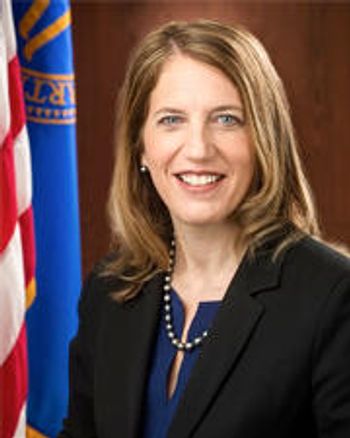
HHS secretary Sylvia Matthews Burwell announces major industrywide pledge to make EHRs work better for patients and providers.
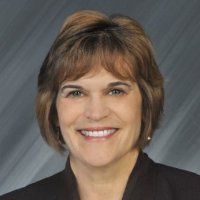
HHS secretary Sylvia Matthews Burwell announces major industrywide pledge to make EHRs work better for patients and providers.

OhioHealth is using mobile technology to help its patients become better informed on their care, which leads to happier patients and better outcomes.

How health IT played an important role in one Colorado group's success in population-care management through a CMS pilot program.

With hundreds of sessions, thousands of exhibitors, and 40,000 people to meet, you'll need to plan your time at HIMSS16 strategically.

Providers are dropping the ball when it comes to what patients want out of mobile health platforms. Here's what they should know about its potential.

Practices have to learn to better leverage healthcare data from IT systems to improve their performance.

Seek out peer organizations for benchmarking and create opportunities for face time with your vendor contacts.

Solicit feedback from physician and non-physician users, and always keep the vendor’s perspective in mind.

Physicians know what true "interoperability" means, but they have to deal with a misguided definition from the health IT industry.

More healthcare organizations - and thus, more patients - are being victimized by cyber criminals. Physician practices are not immune to this threat.
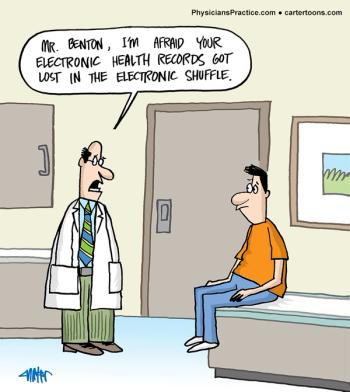
Are you under the belief that because patient’s health records have become digitized, they can’t get lost in the shuffle? As this doctor proves, think again.

Recently, I downloaded my EHR iPhone app. While the app can provide a level of convenience, it isn’t ready for prime time.

Meaningful use is not dead, as some have been suggesting. However, it is nearing its end and that fact has many physicians excited.

Tap your tech-savvy physicians as inside experts and champions while investing time in education and support.

You’ll thank yourself later if you get everything in writing and establish a milestone-based payment schedule.

Before you throw dirt and write the obituary of meaningful use, physicians should know this about the program supposedly ending in 2016.
Despite all the hoopla surrounding ICD-10, nearly half the practices polled by Physicians Practice had no problems in transitioning to the new code set.

Improving EHR documentation will be an essential way to combat the recent trend of upcoding that has gotten the attention of the federal government.

EHRs are still cumbersome and have not yet reached their potential. Yet, they will eventually better patient relations.

With the new year upon us, here are six predictions on how physician practices will continue to automate their processes in 2016.

As the PA profession gets younger, the adoption of EHRs has become easier at practices which employ them. This has helped increase adoption rates.

Part two of a two-part series where Physicians Practice looks back at the top health IT issues of the year. More practices looked to the cloud in 2015.

Long distances to drive and limited access to specialty care can make managing care transitions difficult. Technology can help.
In a two-part series, Physicians Practice looks back at the top health IT issues of the year. Part one focuses on meaningful use and ICD-10.
More physician-friendly, easier access to actionable data, and access to real-time claims adjudication are at the top of the EHR wish list in 2016.