






Not sure whether you should document in the EHR with the patient in the room? Real-time medication reconciliation and accurate patient records are benefits.

Not sure whether you should document in the EHR with the patient in the room? Real-time medication reconciliation and accurate patient records are benefits.

Many practices are reluctant to make the switch from a physical server to the cloud. Here's why storing data in the cloud makes sense.

Improved user experience, help with population health management capabilities and 2015 CMS certification round out this list.
It seems like almost every physician is bringing a phone or tablet into the exam room and using mobile in their everyday life. Here are some medical apps to consider.
From this doctor's point of view, EHRs make little sense when it comes to dollars and cents.

Avoid having problems with data protection. Here are eight steps to take to develop and support an effective IT security training program.
When you keep the patient as your focus, figuring out how to get behavioral health data into the EHR works itself out.

Templates can make documenting care more efficient, but doctors still need to make each visit unique. Here are some pros and cons on using them.
An outlier, fluent user of EHR systems gives his thoughts on the technology, including the pros and cons.

If you are attending this year’s Medical Group Management Association conference in San Francisco, here are nine things to put on your agenda.

Recent guidance from the U.S. Department of Health and Human Services (HHS) reinforces that the HIPAA conduit exception does not apply to Cloud Service Providers.

The cold reality of life under MACRA should be alarming to small and solo practice physicians.
From hiring in-house IT talent to undertaking strategic partnerships with other practices, providers have options when it comes to deploying their new EHR.

Here are six ways practices can better drive patient engagement and increase satisfaction.

The powerful combination of wireless technologies and use of mobile has revamped the face of health service delivery across the globe.
There are multiple problems with a disturbing trend that has seen PAs assigned as EHR scribes. For one, it's a misuse of their talents.
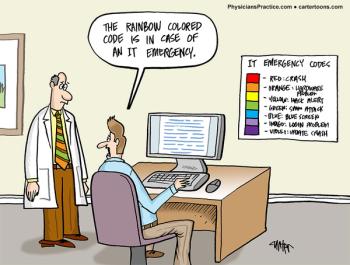
This practice seems to have figured out a clever way to deal with a variety of IT problems. Can you see your practice using this method?
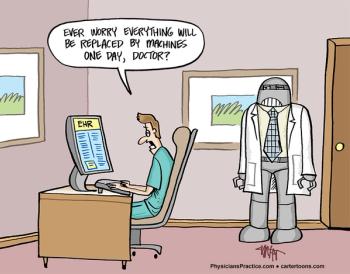
Robots are going to play a vital role in the future of medicine, according to many technologists. In one practice, this transformation has already begun.
Thinking of moving your EHR system to a cloud-based vendor? Here are a few questions to ask your potential vendor.
Two practices are using technology, physician ownership, and patient workflow to update medications in the EHR.

There are ways for your practice to get paid in a more efficient manner thanks to new technology.

HIEs are increasingly connecting providers centered around primary-care, but what about behavioral data?

While upgrading your technology may cost you, it will pay off in the long run, according to recent research efforts.

This Colorado practice switched to a cloud-based EHR and then switched back to a server-based system. Here's the reason why.

Why is one OB/GYN practice dedicated to pulling information from its EHR and other data sources?