Think podcasting is some teenage phase? Think again. It may be the key to differentiating your practice and attracting new patients.

Think podcasting is some teenage phase? Think again. It may be the key to differentiating your practice and attracting new patients.

Examining your practice’s processes is the first step toward solving office inefficiencies. You may discover that low-cost, low-tech tools can help you more than a pricey EMR.

The tech you want may not be the tech you need

Evaluate your peripheral options carefully when purchasing an EMR. If your physicians are uncomfortable with the PDA or tablet PC you choose, they’ll go back to paper.

Not all high-tech tools come with futuristic price tags. These solutions can streamline your processes, boost your bottom line, and make doing your job a whole lot easier.

Learn how to avoid others’ EMR mistakes.

Sure, the big IT tools help. But teaching your staff keyboarding, PC shortcuts, and how to use scanners and PDAs can go a long way toward boosting your operational efficiency.

You don’t have to be a computer scientist to keep your patient data away from prying eyes. Here are some simple, non-nerd-friendly ways to keep your information secure.

Price may be the biggest stumbling block to EMR adoption: The darn things just cost too much. Or do they? Expert Rosemarie Nelson looks at some less expensive options.

How technology can help keep your waiting room full.

When it comes to technology adoption, is your office leading the way - or standing on the sidelines? Here’s the scoop on what’s really happening out there.

You know what you want. Now you have to pay for it. But should you purchase that gizmo outright, or should you rent it?

Has voice recognition technology finally advanced enough to be reliable?

If you feel lost in the tall grass of EMR-shopping, it may be tempting to restrict your search to the new batch of “certified” systems. Is that wise? One year after an independent group began issuing endorsements, we ask: How much should you care?

How electronic prescribing will make your life easier and your patients healthier.

Congratulations, you’ve finally moved into the 21st century by purchasing that EMR. Now don’t let yourself get blown into the Stone Age by failing to properly back up your new electronic files.

If you’re looking for an EMR, you’ll have to decide between scrapping your current practice management system and starting fresh, or combining your existing system with your new EMR.

It’s not as hard as you think to “wow” patients with a sophisticated Web site. And doing so can make life easier on you, too.

You may think that getting an EMR means your practice will finally be “paperless.” But even with an EMR, you will still be killing plenty of trees with faxes, snail mail, lab reports, etc. Still, that may not be so bad.

In the market for an EMR? Here’s a crucial question: Client-server or ASP? Relax. We’ll explain what it means. And help you decide.

Three change-management strategies from corporate America that can work for you.

Your patients wish you’d communicate with them via e-mail, and it makes financial sense to do so. So why hasn’t it caught on with physicians?

Most patients would love to communicate with you via e-mail. But only a fraction of you allow this. What gives?

Using online tools to educate your patients.

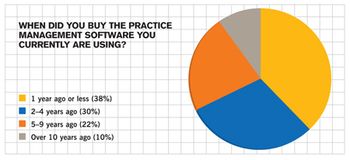
Do the computers in your offices look like green or amber telebubbles? You’re definitely not alone; with all the hype surrounding EMRs, many physicians have neglected their practice management systems. Here’s how to know if it’s time for something new.