


Practice management is about making decisions, but strong practice management is about making smart decisions. Here's how.
Practice management is about making decisions, but strong practice management is about making smart decisions. Here's how.
We believe that the future of U.S. healthcare is decentralized, mobilized, and democratized. Here's why.
Physician sellouts to hospitals, hospital cabals, clueless and complicit regulators, lawmakers, and reporters create a perfect storm of greed and incompetence.
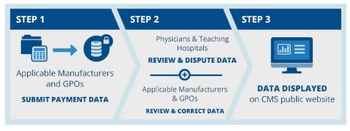
CMS has unveiled its Open Payments website, revealing gifts to physicians. Here's what you need to know about the site and its information.

From reviewing state laws to understanding reimbursement, the American Academy of Physician Assistants offers six tips to hiring a physician assistant.

Despite all the roadblocks to career fulfillment, my original, idealistic view of becoming a physician is still relevant and meaningful to me today.
Crisis, real or manufactured, feeds politics and the press. In the real world, we have real problems and need real solutions. One is the primary care scare.
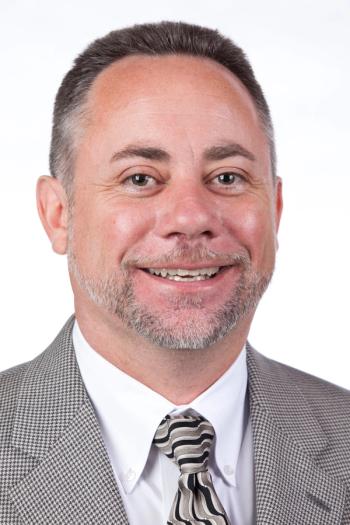
John McGinnity, president of the American Academy of Physician Assistants, shares how PA practice is changing, and how physicians and practices should adapt.
I recommend that physicians think long and hard before selling to hospitals. In the meantime, here are a few steps they can take to maintain their independence.
Here are 10 advantages of joining a physician-owned mega group.

The insanity of CMS' Open Payments portal might benefit physicians. The key is a little civil disobedience to demonstrate the true value of physician time.
Three more Pioneer ACOs have dropped out of the program proving that you can't get real results without real change.
If someone gave me a magic wand and asked me to change the landscape of the U.S. healthcare system here's what I would do.
Population health is much more than a buzzword. It is the future of healthcare, but, why?
Physicians in small practice need to explore how they can survive in a changing financial environment.
Confused about how the healthcare system is going to change? Let's follow the money to find the answers, starting with recent news from CMS.
Real healthcare reform will remain elusive as long as management accepts the notion that the way to fix healthcare is to automate it.
Small, independent medical practices are struggling to thrive alongside larger networks; here's what they can do about it.
Healthcare - like education - relies heavily on people and as such, can never become the ideal smoothly running machine that many dream of.
Hospitals are gearing up for shared risk and quality requirements under the Affordable Care Act that will affect hospital-physician interaction.
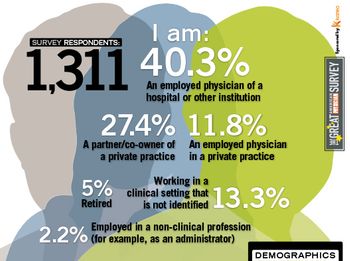
Get unique insight into the personal and professional lives of physicians through the results of the 2014 Great American Physician Survey, Sponsored by Kareo.
Not only is it important that physicians report payments via the Sunshine Act, but also verify they match the amount the gift-giver is also reporting to CMS.
Though more and more accountable care organizations are cropping up across the country, I don't believe they will be effective. Here's why.
Value-based reimbursement has a bad reputation because it is misunderstood. Done correctly, through an IPA, it could be primary care’s saving grace.
More than 8 million patients have signed up for insurance due to the ACA, according to HHS, but where are all of them?