






It’s early in the ICD-10 transition, but one doc began dual coding over a year ago and already has a few lessons to dole out.
It’s early in the ICD-10 transition, but one doc began dual coding over a year ago and already has a few lessons to dole out.
ICD-10 is now the official language of insurance claims. Here's how to avoid translation problems and other tips to keep your head above water

Tomorrow is the big day for the ICD-10 transition. If you’re feeling overwhelmed, here are ten last-minute resources to help you out.
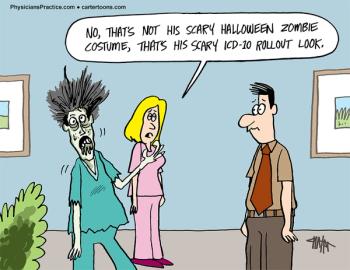
With ICD-10 implementation deadline and Halloween both coming up, here’s another cartoon that looks at the scary similarities of the two days.
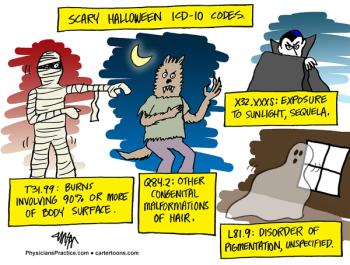
With Halloween and Oct. 1 both coming up, here is a look at the scary sights of ICD-10. Which do you find more frightening - ICD-10 or Halloween?
For small practices that feel behind on ICD-10 readiness, one potential solution would be for them to partner with a local large health system.

Two recent articles underscore the importance of cybersecurity across all facets of a physician’s practice and what questions should be asked.

An ICD-10 critic goes over four myths that have been pushed by the coding set’s supporters and why he is against the transition

With ICD-10 rapidly approaching, our resident PA, Stephen Hanson looks at the importance of EHR usability in the transition.
Oct. 1 will be here before you know it. If you aren't ready for ICD-10, it's time to narrow your focus.

When ICD-10 hits on Oct. 1, coding habits aren’t the only thing that will require adjustment. Here are five EHR-specific tips for the transition.
If you don’t think your practice will be ready to transition to ICD-10 by Oct. 1, partnering with your EHR vendor is one strategy to employ.

Medicare has amped up its efforts to collect debts related to alleged billing/coding errors, which is hurting providers in the pocket.

Taking care of a patient is what doctors strive to do, not judging a bee’s intent, a requirement of the new ICD-10 coding system.
WEDI's ICD-10 readiness survey paints an ugly picture for physician practice readiness. However, one expert said the situation may not be that bad.

CMS recently offered new tools for the ICD-10 transition. But some providers are still floundering.

Technology tools, like Apple’s ResearchKit, present exciting opportunities for healthcare, but they must be regulated to protect personal health data.
With less than two months to go before the ICD-10 goes live, most physician practices haven't done readiness testing. Why not?

Here’s one unique perspective on why in today’s healthcare environment, it’s not easy to reconcile the clinical and business sides of medicine.
Practices are more at risk for breaches than ever before. Here are a few steps to protect data in the EHR and elsewhere.

While EHRs are important to analyze in any merger, don't forget to assess and formulate a strategy for your compliance technology as well.

With the increased buzz around the direct primary care model, here's what you need to know about the private healthcare transition.
It's common knowledge a more engaged patient is a more compliant patient. So why can't medicine bridge the digital divide to connect with patients?

It's time to "bridge the gap" with patients between patient visits. Here's how technology is helping one practice do it.
Are your patients relying too much on inaccurate information from Dr. Google? Here are some resources to steer them in a better direction.