





For one doctor, the EHR can visualize the amount of work that is done by a physician on a daily - and nightly - basis.

For one doctor, the EHR can visualize the amount of work that is done by a physician on a daily - and nightly - basis.

Physician satisfaction, training, return on investment, and patient comfort all matter when considering hiring EHR scribes.

Practices do not just have to use staff members to improve their financial situation. The EHR can also be a huge help.

Looking for ways to increase practice profits? You may find the answer on your payroll.

One doctor has seen that medical training and trust are key when working with a scribe to document care in the EHR.

No matter how small your practice is, it's important to put technical and human safeguards in place now to protect your data.
Small practices can take steps to avoid being hit with ransomware. The key focus should be on implementing technical safeguards and working with staff.
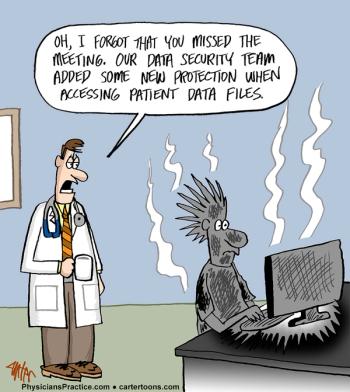
This physician's practice found a more effective way to protect patient data. However, it may have come at his colleague's expense.

If your practice is considering an office redesign or building a completely new space, make sure you ask the right questions first.

Various tools within the EHR can be important in speeding up the process of documenting the patients' care, but providers must be careful about the potential hazards of this added convenience.

Setting a concise, yet comprehensive, practice policy on social media use protects not only your patients but staff members as well.

Email is a simple way for physicians to improve care and lower costs for their patients. Yet, most claim that patients don't want to interact this way.
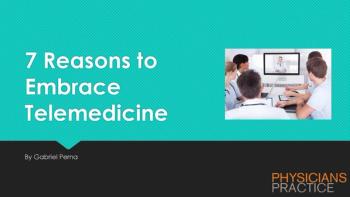
More and more physicians are interested in using telemedicine. Here are a few reasons why this technology has gained admirers.

If your practice is wondering whether it should keep or change its EHR system, there are pluses and minuses to each route.
Is it time to go a new route with your EHR system? Before you decide yes or no, weigh the positives and negatives.
From training to hardware to new population health software, budget time is the right time to make sure your current EHR set up meets the needs of your practice.
While there isn't a lot of data available on the EHR, recent studies show the promise of the technology in cost savings, diagnosis, and patient safety.
The increasing prevalence of organizations’ data being held hostage until ransom is paid should cause physicians and all holders of PHI to have a “Plan B.”

One man has set out to educate the state of Mississippi on how telemedicine can benefit them. He explains this unique job in a Q&A.

Given that a majority of practices use digital health records, a simple power outage can have grave consequences.

Healthcare cyberattacks can put your patients and medical practice at risk. The good news is there are both high-tech and no-tech means to be safe.

Prepping for a new agreement with a health IT vendor on a critical piece of technology? Consider these 10 tips before signing on the dotted line.

Practices have shied away from listing healthcare prices online, but doing so can benefit both patient AND provider, says one expert.

New guidance from HHS’ Office of Civil Rights has not only clarified patients’ rights to request a medical record, but also what practices can charge.

Physicians shouldn't look at as telehealth as a threat, but rather as something that can bring them closer to their patients and improve care.