
The survey revives a stalled bill that would end the physician agreements practices maintain for the nurse practitioners they employ.
For the first time in years, physician pay and productivity have split, and a new Medicare efficiency adjustment is about to make 2026 a hard year to benchmark, schedule and recruit.
For the first time in years, physician compensation and productivity have moved in opposite directions — pay is up, encounter volume is down — and practice leaders are trying to work out what it means heading into a turbulent year.
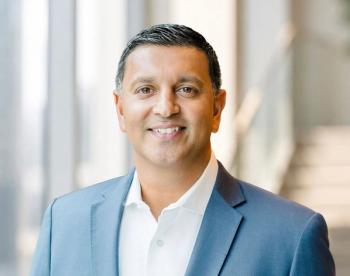
Physicians Practice Managing Editor Keith Reynolds sits down with Andy Swanson, chief customer success officer at the Medical Group Management Association (MGMA), to unpack the group’s latest
They dig into why encounters are falling while acuity and pay climb, whether rising compensation against flat reimbursement can hold, and how the new Medicare efficiency adjustment — a 2.5% cut to the work RVU value of roughly 7,700 codes — will land hardest on procedural specialties.
Related content:
Don’t miss our recent episodes on
Music Credits:
Paper Cranes by Buurd -
A Textbook Example by Skip Peck -
Editor's note: Episode timestamps and transcript produced using AI tools.
0:00 – 0:25 | Cold open — Swanson sets up the central tension: if costs keep climbing while reimbursement stays flat or falls, the current path isn't sustainable.
0:25 – 1:10 | Introduction — Austin Littrell previews the episode and the guest.
1:10 – 1:39 | Welcome and setup — Keith Reynolds welcomes Swanson and introduces MGMA's latest provider compensation and productivity data report.
1:39 – 3:15 | What's behind the split — Encounters are down but carry higher acuity, and compensation rose roughly 1.5% to 3% even as work RVUs slipped. Swanson cautions against reading the volume dip as lower physician effort.
3:15 – 4:29 | Can the split last? — Two long-term problems: pay can't rise indefinitely as production falls, and rising costs against flat or negative reimbursement eventually hit a breaking point.
4:29 – 6:50 | The Medicare efficiency adjustment — A 2.5% cut to the work RVU value of about 7,700 codes hits procedural specialties hardest. Swanson explains how to benchmark around it and defend against the paper-only reimbursement hit.
6:50 – 9:19 | Recruiting into the squeeze — Cutting starting salaries in hard-to-recruit specialties won't land top candidates. Swanson makes the case for schedule management and smarter APP staffing ratios instead.
9:19 – 10:25 | P2 Management Minute — Keith Reynolds shares practice management tips and invites listeners to send in their own workflow ideas.
10:25 – 12:12 | Is burnout the new baseline? — Swanson says the industry has hit a new baseline, with one in three doctors citing burnout as a reason to leave, and argues it's still unsustainable.
12:12 – 14:43 | Why AI's payoff is so uneven — The clear win has been ambient scribes at the bedside. Swanson urges patience on the next wave of gains and pushes back on the industry's short attention span.
14:43 – 14:57 | A quick aside on the OpenAI IPO — A brief, lighter exchange. (Swanson: no personal investment advice.)
14:57 – 17:37 | The one number beyond work RVUs — Total visit volume. Swanson makes the "back to the future" case for panel size and encounters, and a rethink of base-plus-production pay models as APPs absorb more volume.
17:37 – 18:30 | Closing thoughts — Swanson expects 2026 baselines to be wonky and is already looking ahead to 2027.
18:30 – End | Outro — Austin Littrell wraps the episode with a Fourth of July send-off.