


Here are 10 advantages of joining a physician-owned mega group.
Here are 10 advantages of joining a physician-owned mega group.
It is time for physicians and their staff members to develop strategies to help their practices survive and thrive.
Three more Pioneer ACOs have dropped out of the program proving that you can't get real results without real change.
It is feasible and often desirable for NPs to participate in concierge programs. But be careful, you need to explore the issue fully before proceeding.

Most physicians want a favorable practice environment. If you want to know where to find it, here's our annual ranking of the best states to practice.
Healthcare pricing throughout the United States is inconsistent, with no national norm to quantify cost or measure quality.
How a five-physician internal medicine practice nixed its payer contracts and began charging patients directly for services.
One EHR company is selling access to its subscribers to commercial companies through advertising. Could this business model apply to other areas of healthcare?
Coming together to benefit from economies of scale is good for physicians and their patients. One way to do that is to form a super group.
The physician assistant profession is booming due to the unique strengths it brings to the healthcare system and healthcare teams.

Our Great American Physician Survey, Sponsored by Kareo, indicates greater physician acceptance of alternate practice models to help themselves and patients.
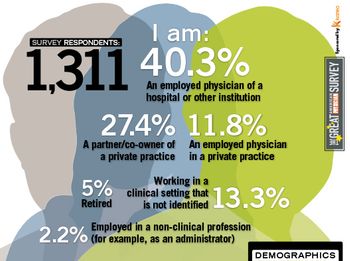
Get unique insight into the personal and professional lives of physicians through the results of the 2014 Great American Physician Survey, Sponsored by Kareo.
Technology continues to be promoted as a way to increase efficiencies; but will doctors lose that important human contact and touch as it grows?
Though more and more accountable care organizations are cropping up across the country, I don't believe they will be effective. Here's why.
Value-based reimbursement has a bad reputation because it is misunderstood. Done correctly, through an IPA, it could be primary care’s saving grace.
Many are still confused about accountable care organizations. Here's how they came about, and how the Medicare ACO program works.
Curious about transitioning to a direct-pay medical practice? Here are some of our most popular articles about this emerging practice model.
When so-called “quality measures” don’t include small medical practices, patients lose out on finding great physicians.
It is important for practices to participate in patient-centered programs in order to focus their culture on improving the patient experience.
Many medical practices today are sick; it's time to quit avoiding the symptoms and look for the cure.
The concept of population health is straightforward. Achieving it, not so much, because it requires numerous fundamental changes in our delivery system.
The near future for physicians: Dying mom and pop store owners in a big-box health plan, hospital system world trading lab coats for a branded apron.
Patient-centered care is not just for primary-care practices. Here's what you need to know about the Patient-Centered Specialty Practice program.
A great partnership between physician practices can quickly fall apart if productive relationships are not maintained and nurtured.
Concierge can work for some specialties. But many parts must fit together to find success.