


For Medicare to survive and to decrease healthcare costs in this country, healthcare delivery needs to change.
For Medicare to survive and to decrease healthcare costs in this country, healthcare delivery needs to change.
Physicians can make mistakes when adopting new practice models on their own. Experts can help and should be considered.

The art and practice of medicine has changed remarkably, yet the core tenet of medicine - caring for patients - remains what doctors do best.
Do you know what patients value? If considering a concierge medicine program, that will be a critical question to answer.
The latest physician compensation survey from ECG Management Consultants highlights increasing emphasis on value, quality of care.
How one physician transitioned to this new practice model and why he did it.
If your medical practice has not yet seriously considered transitioning to a Patient-Centered Medical Home, it may be falling behind.
Vic Arnold, a managing director at Huron Consulting, discusses practice-alignment strategies that will aid long-term survival in a partnership.
Joining a large group is tempting; but it may lead to less autonomy and in years to come, greater risk. Concierge programs can help offset loss of independence.
A conversation with Wayne Lipton, founder of Concierge Choice Physicians LLC, on what hybrid concierge is and why physicians might want to consider it.
Looking for a way to keep your medical practice private? Consider becoming a group without walls which groups offices, but maintains autonomy.
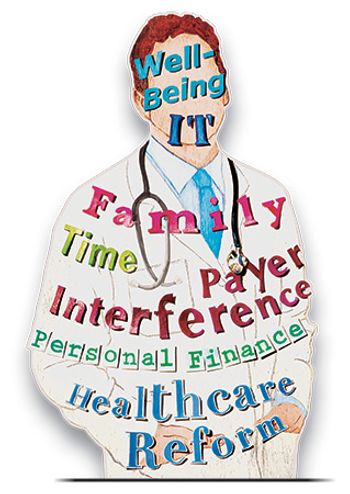
Our 2013 Great American Physician Survey, Sponsored by Kareo, reveals physicians striving for work-life balance amid the changing landscape of healthcare today.
Marketplace uncertainty has led to a record-breaking number of physicians selling their practices. Make sure you check out options to remain independent first.
Why one physician made the transition to direct pay and how he did it.
You've received recognition as a Patient-Centered Medical Home, now be sure to market that fact effectively to prospective and current patients.
My husband and I owe the success of our practice to being a micropractice and our participation in an independent physician association.
A recent decision by HHS' Office of the Inspector General raises some interesting issues with ACOs participating in the Medicare Shared Savings Program.
The growth of accountable care organizations is accelerating and will likely continue into 2014. Here's what it means for physicians.
Forcing vulnerable patients to make financial decisions under high-deductible plans takes clinical decisions out of physicians’ hands.
If you are an independently minded physician, take heart. There is a way to work with new quality standards and still retain your autonomy.
Unhappy with the state of her practice, this doc decided to ask her patients what they wanted.
Patient-Centered Medical Homes are good for healthcare, but medical practices should also be realistic about the model, if it is truly a good fit, and its results.
Physicians must collect payments patients often don’t understand or like and it is going to increase under the Affordable Care Act. The remedy is to add value.
This week we take a large-scale view of essential legal and business issues for physicians, updated for 2013.
In this video, a physician and staff members from a five-physician practice discuss their transition to a Patient-Centered Medical Home.