






It makes good business sense to outsource the billing for most medical practices. That said, the outsourcing must be to a competent billing service.

It makes good business sense to outsource the billing for most medical practices. That said, the outsourcing must be to a competent billing service.

By reviewing your fee schedule and comparing it to accounts receivable, you may find hidden money that you didn't know about.

Incomplete or inaccurate patient information can set the stage for a claim denial before a visit. Avoid these mistakes at the front desk.

Lack of feedback from back to front office on coding issues perpetuates a cycle of denials. Here are five tips to help get claims paid the first time.

Sometimes, you have to add a little muscle to the way your staff approaches patient payments and other collections for your medical practice.

One physician describes how her former practice closed its doors after its chief financial officer led it to financial ruin.
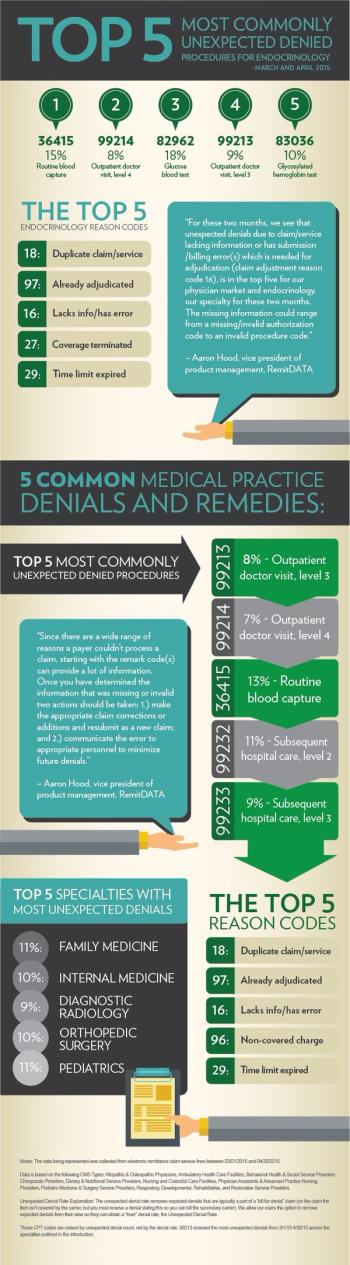
Get insight on the most common unexpected denials at practices nationwide, with a special focus on endocrinology, from RemitDATA.

Practices can often feel helpless when it comes to working with payers. Here's how they can change that dynamic and become empowered.

Make sure your practice is getting paid what it is owed for the work you perform with these four tips.

Available talent, specialty, and size are just three factors in deciding whether or not to outsource your practice's revenue cycle management.

Thinking about outsourcing your medical billing? Here are nine questions to ask a prospective outside biller or billing service.

A little preparation by your practice before reaching the negotiating table with payers could mean a big difference in reimbursements.

Stay on top of your claims and denials with these four tips to spot problems early and maximize payer reimbursement.

Before deciding to provide and bill for chronic care management, a practice should make sure it has the necessary staff and support structures first.

From actually locating your payer contracts to making negotiations effective, here are five strategies for your medical practice.

With patients taking on more financial responsibility, have a strategy in place to collect what you are owed.

A few trends affecting payer contracts can't really be resolved with better organization, but should be kept in mind.


Use the technology your practice likely already has to improve your patient collection rate.

RemitDATA's Aaron Hood explores the most common unexpected denials at practices nationwide, with a special focus on radiology.
Communication is key as patients are more likely to take their financial obligations seriously when they have a strong relationship with the practice.

Payer rules are complex and constantly change, making them difficult to follow. Here's what your medical practice should watch out for.

Answers from our coding expert on questions regarding Level 4 documentation and RN reimbursement.

Collecting from patients is vital to a practice's bottom line. But often, it is an inconsistent process, done poorly. Here's what you can do about it.

Here are eight simple tips from practice management experts to collect more of the money your practice is owed by patients and payers.