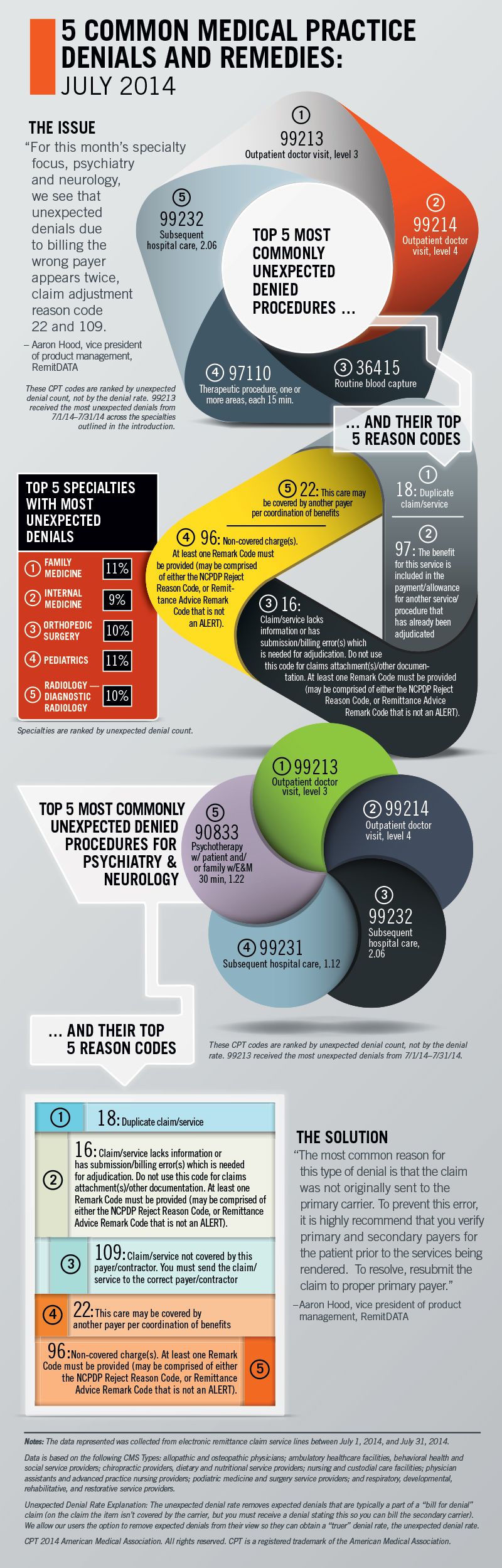

RemitDATA's vice president of product management, Aaron Hood, explores the most common unexpected denials at practices nationwide, focusing on endocrinology.

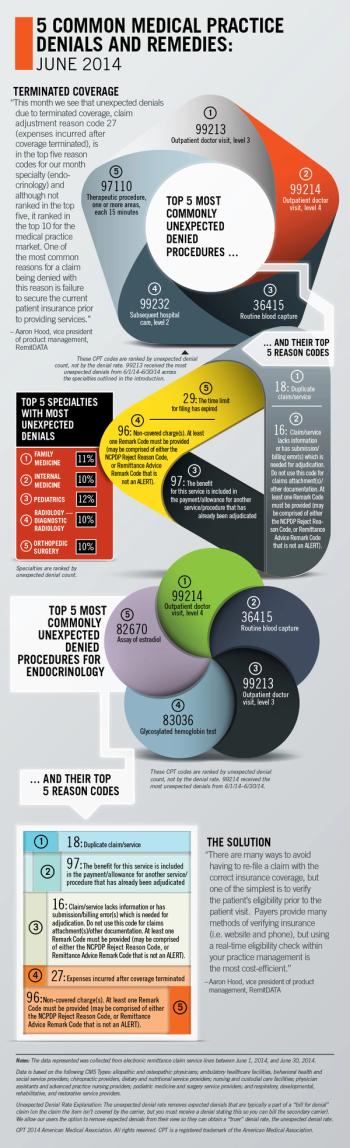
RemitDATA's vice president of product management, Aaron Hood, explores the most common unexpected denials at practices nationwide, focusing on endocrinology.
Value-based reimbursement has a bad reputation because it is misunderstood. Done correctly, through an IPA, it could be primary care’s saving grace.
With costs front and center for patients, in simple and stark terms: If you can’t deliver what the consumer perceives as quality, you will lose.
If your practice accepts medical liens as part of your payer mix, it's a good idea to have a specific follow-up plan in place.
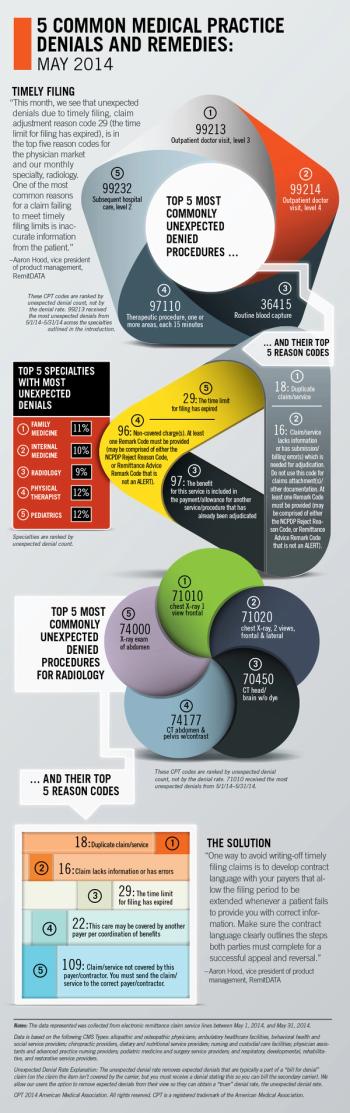
RemitDATA's vice president of product management, Aaron Hood, explores the most common unexpected denials at practices nationwide, with a focus on radiology.
Here's what physicians and medical practice managers can do to keep the financial side of their practices running smoothly.
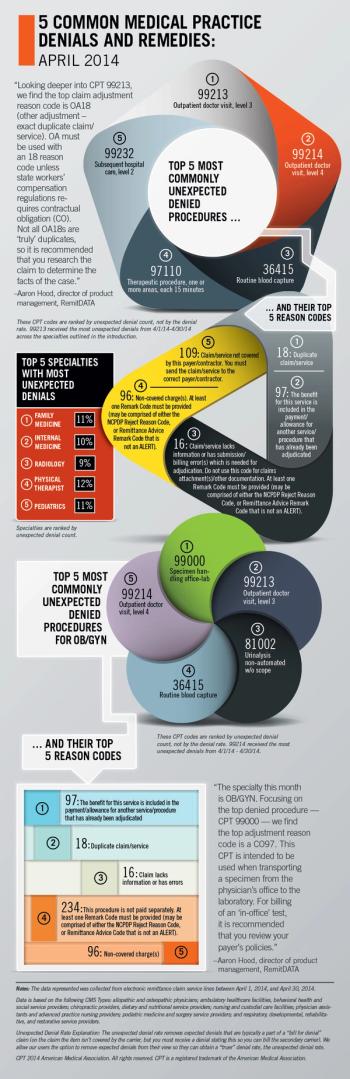
RemitDATA's director of product management, Aaron Hood, explores the most common unexpected denials at practices nationwide, with a focus on OB/GYN.
Regardless of the Affordable Care Act, the way healthcare is delivered and reimbursed will change. Here are five things physicians should consider.
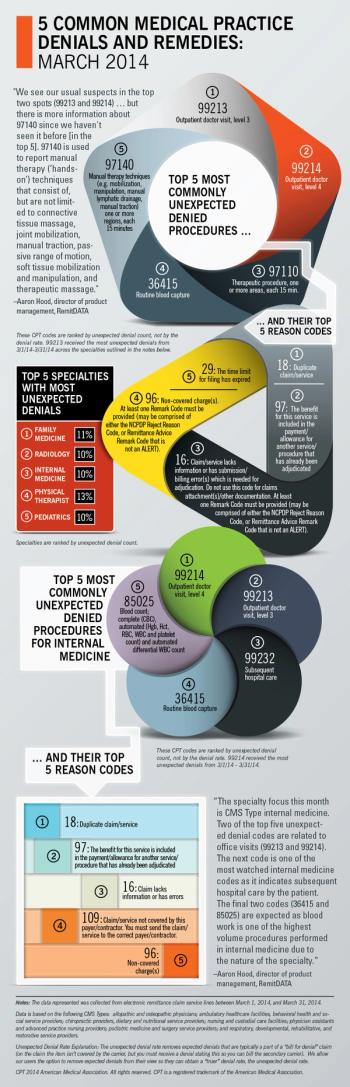
RemitDATA's director of product management, Aaron Hood, explores the most common unexpected denials at practices nationwide, with a focus on internal medicine.
While embezzlement is a common problem for medical practices, there are ways to spot and foil theft.
The best part of medicine is the part in which we treat a patient like a patient, not a customer.
Don't let the ICD-10 transition hurt your practice's bottom line. Here are ways for you and your staff to survive and thrive during this major change.
Physicians are facing many fears. Prime among them is an uncertain financial future. Anesthesiologist David Norris recommends acquiring sound business skills.
Here are six questions your medical practice should ask a potential billing partner to help you thrive today and remain competitive in the future.
Having plans in place for ICD-10 and patient engagement are the final steps in creating a medical practice survival plan for 2014.
Stopping consistent denials at your practice is not only possible, but necessary. Take these steps to get your first pass recovery rate above 90 percent.
Coding compliance tips for physicians' ICD-10 transition.
Like it or not, ICD-10 is on the way. Here's how to plan ahead and project its impact to minimize disruption to your practice's revenue cycle.
Here are the five best payers for medical practice claims in the U.S., according to athenahealth's 2013 PayerView rankings.
Here are the rankings of the best Blues in the U.S. for medical practice claims, according to athenahealth's 2013 PayerView data.
Here are the eight best major payers for medical practice claims, according to athenahealth's 2013 PayerView rankings.
Here are the best Medicaid payers for medical practice claims, according to athenahealth's 2013 PayerView rankings.
Here are the best Medicare payers for medical practice claims, according to athenahealth's 2013 PayerView rankings.
Here are the rankings of the best payers in the Midwestern U.S. for medical practice claims, according to athenahealth's 2013 PayerView data.
Here are the rankings of the best payers in the northeast U.S. for medical practice claims, according to athenahealth's 2013 PayerView data.