




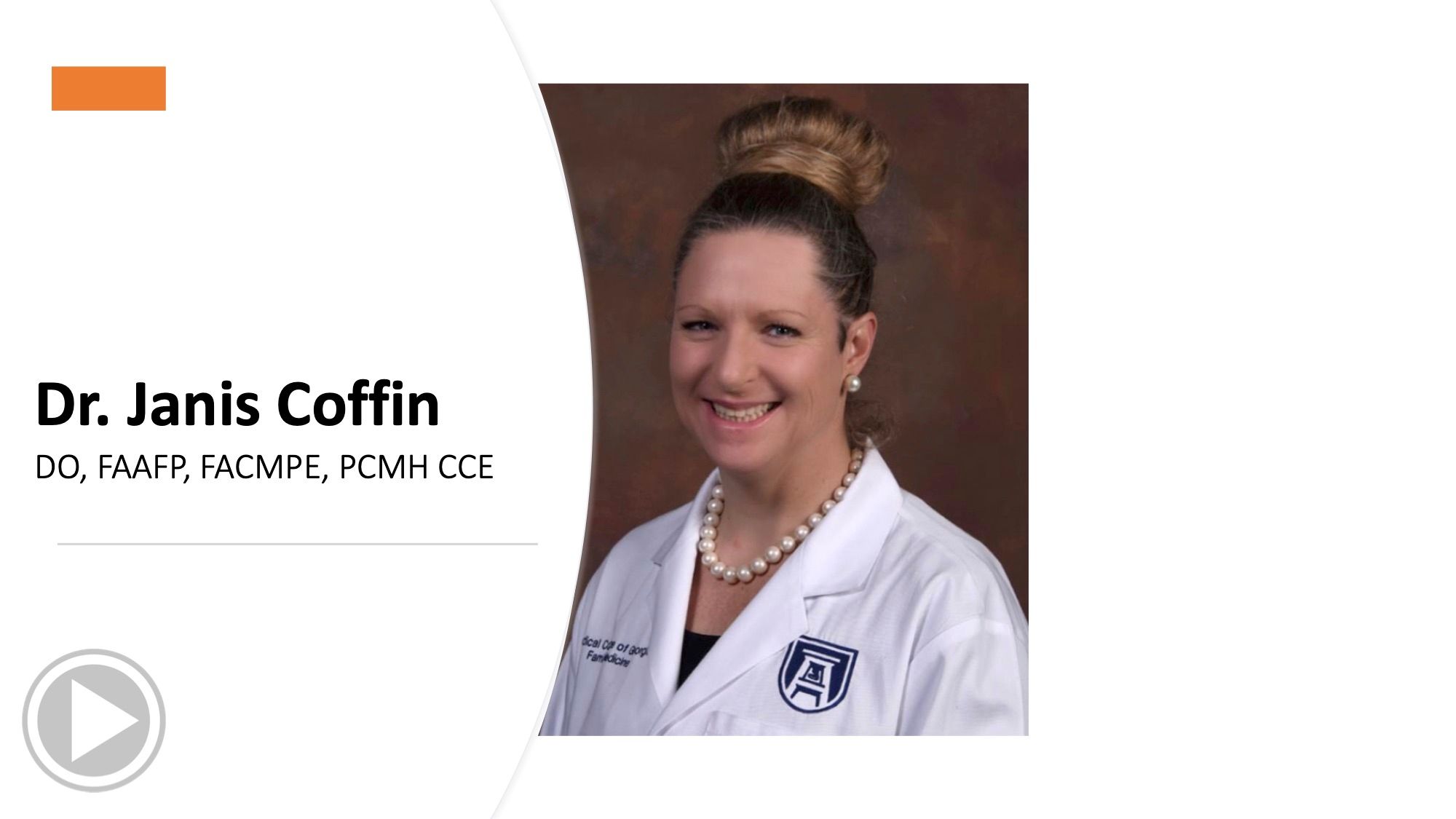

Dr. Janis Coffin, DO, discusses how telehealth has increased the opportunity to manage patients with chronic conditions and how practices can financially benefit from these setups.

Dr. Janis Coffin, DO, discusses how telehealth has increased the opportunity to manage patients with chronic conditions and how practices can financially benefit from these setups.

Social media gives you insight into the needs of your patients. Don't ignore the opportunity to market your practice to specific patient populations.

Insights from MGMA’s Medical Practice Excellence Pathways Conference.

Physicians Practice® spoke with Chuck Lee, MD, about the complications of low patient health literacy levels and how physicians can improve these levels through communications, partnerships, and outreach.

Software is a powerful tool for provider-patient collaboration, which is one of the most important factors for determining outcomes in every area of health.
Dr. Janis Coffin, DO, discusses how she has witnessed telehealth adoption change over the course of the pandemic

How reputation management has been key to attracting more customers for one virtual care program.
From ACP’s 2021 Internal Medicine Meeting.
How one practice managed the transition to virtual care before the pandemic.

Some of the ways the industry is addressing these issues in medical school and beyond.

Solutions that have become more than just “nice-to-have” since the beginning of the 2020 pandemic.
Patients can hold biases toward physicians in the same way that physicians can be biased in their care delivery.
The difference between a ‘conscious bias’ and an ‘unconscious bias’ and how they are measured.
What bias means for physician’s everyday work experiences.

With consumer-driven business models running the show, your existing call-handling systems and protocols are likely not contributing to the patient loyalty you need for a thriving practice.

What practices should be planning for to make the best RCM strategy this year, from David Cohen, chief product and technology officer of Greenway Health.
The benefits and challenges involved with integrating a telehealth system with an EHR.
The concept of integrated telehealth solutions and how this impacts workflows.
How physicians can remain updated with standards of care.
Will point solutions continue to emerge, or will there be a widespread consolidation of programs and services?
How providers should take issues into consideration when exploring point solutions for their patients.
The phenomenon of ‘point solution fatigue’ affecting physicians, providers, and payers.

Now is the time for decisive COVID-19 recovery.
The shortcomings of current standards of care and why finding solutions might be so challenging and complex.

Improve the quality of staff relationships, increase efficiency, and profoundly impact patient safety.