

Physicians have a multitude of options when structuring ACOs. Make sure you understand all the legal requirements before committing your practice.
Physicians have a multitude of options when structuring ACOs. Make sure you understand all the legal requirements before committing your practice.
Americans have changed how they manage their household finances, and medical practices must adjust accordingly.
If your practice accepts medical liens as part of your payer mix, it's a good idea to have a specific follow-up plan in place.
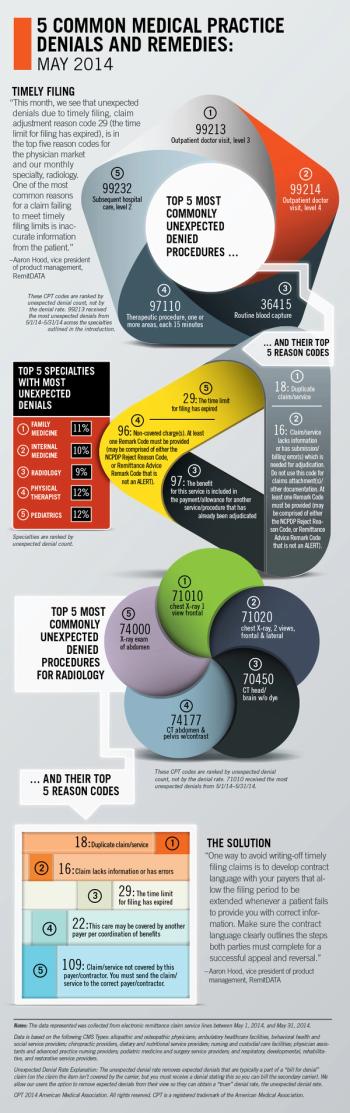
RemitDATA's vice president of product management, Aaron Hood, explores the most common unexpected denials at practices nationwide, with a focus on radiology.
Proposed changes to the Physician Fee Schedule for 2015 will affect calculation of payment rates and potentially misvalued codes.
Except where CPT guidelines state otherwise, follow these four tips to ensure you’re reporting time-based services correctly.
Knowing how to calculate RVU values is critical if you are going to apply them to any other applications. Here's a primer for your medical practice.
If you've ever heard a staff member try to calm an angry patient down on a phone call, you have a great opportunity for training.
Here are 10 tips for Medicare Advantage plans and their aligned physicians to maximize revenue when it comes to Hierarchical Condition Category coding.
When patients refuse to pay their cost-share for healthcare, you have a surprise go-to resource to help get you paid.
When it comes to billing Medicare, you may very well be able to bill one physician incident-to another. Here's how.
It's important to work with your EHR vendor to ensure ICD-10 compliance in 2015. Here are some of the challenges to address right away.
When your patients have a great experience with your staff, but a not-so-great one with your billing department, it's time to make some changes.
Here's what physicians and medical practice managers can do to keep the financial side of their practices running smoothly.
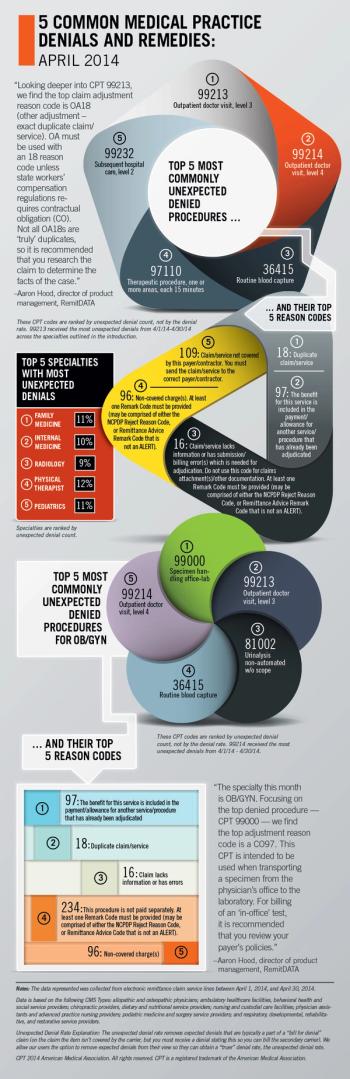
RemitDATA's director of product management, Aaron Hood, explores the most common unexpected denials at practices nationwide, with a focus on OB/GYN.
As part of its annual PayerView study, athenahealth outlines key areas where Medicaid is making business tough for physicians.
Each year, athenahealth ranks payers on how easy they are to work with providers. Here are the company's top 5 for categories including Blues, and regional.
Here are strategies for surviving a potential surge in patients with Medicaid and high-deductible exchange plans.
Your practice may encounter more patients than usual this summer and fall. Here's how to prepare.
Sue Bowman of AHIMA discusses how ICD-10 got delayed, the true cost of waiting one year for implementation, and how to get your practice prepared.
It hasn’t dawned on Washington that hospitals and hospital systems will never commit financial suicide by reducing volume, and physicians will pay the price.
The "recredentialing trap," strict payment reviews, and fingerprinting are all underway or on the horizon as ways payers are bullying physicians.
Know who you can turn to when you are continuously denied payment by an insurance company so that your practice can get paid all that it is due.
If your practice is looking to boost its profitability and spend more time with patients, automating your billing and collections may be a solution. Here's why.
Roughly half of all medical practices have implemented EHR, but they still have a long way to go in terms of meaningful use and recovery audit contractors.