





Rarely does the federal government hand physicians a tool that makes life a little better. That’s what OIG Opinion 12-22 does, and now data backs up the theory.

Rarely does the federal government hand physicians a tool that makes life a little better. That’s what OIG Opinion 12-22 does, and now data backs up the theory.

When creating year-end reports, it's best to keep a positive outlook and prepare to propose solutions.

If you're considering concierge medicine, do you become a DIY-er, or do you look to experts?

As the New Year approaches, it is best to re-verify patients' insurance benefits to avoid a poor customer experience.

Assessing your medical practice for risks and determining the likelihood and severity of impact will help you determine the most important areas to focus on.

By monitoring a few simple areas in your practice, you are more likely to financially stay on target and be successful.
Here are three general processes your practice should take into consideration when building its CDI program for better documentation and coding.

CDI will be important with ICD-10 to ensure your practice is staying on top of the clinical documentation and accurate coding. Here's what you need to know.
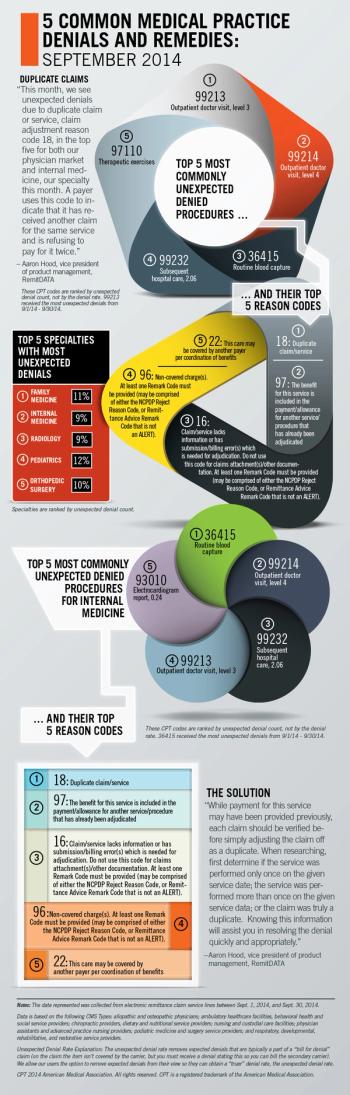
RemitDATA's Aaron Hood explores the most common unexpected denials at practices nationwide, with a special focus on internal medicine.

Technology is a must in accountable care coordination, but also presents challenges. Here are three solutions to achieve the goal of quality patient care.


Our practice does internal chart reviews on our physicians for coding accuracy. What do you feel is an appropriate passing score?
Anders Gilberg of the MGMA discusses your practice's obligation to accept federal or state exchange plans and how to manage them properly.

Ancillary services, like toxicology screening, are part of good patient treatment. So let’s stop scolding docs for getting paid for doing it.
As the health exchange open enrollment period begins, here are some tips for managing new health insurance plans better than your practice did in 2014.

Chris Emper, director of government and industry affairs for NextGen Healthcare, shares his thoughts regarding how GOP control could affect health reform.
Utilizing practice data and becoming a "data whisperer" is your best course to solve problems that creep up in your practice.

Payment software could boost revenue and improve efficiencies at your practice. Here's how to get on board.
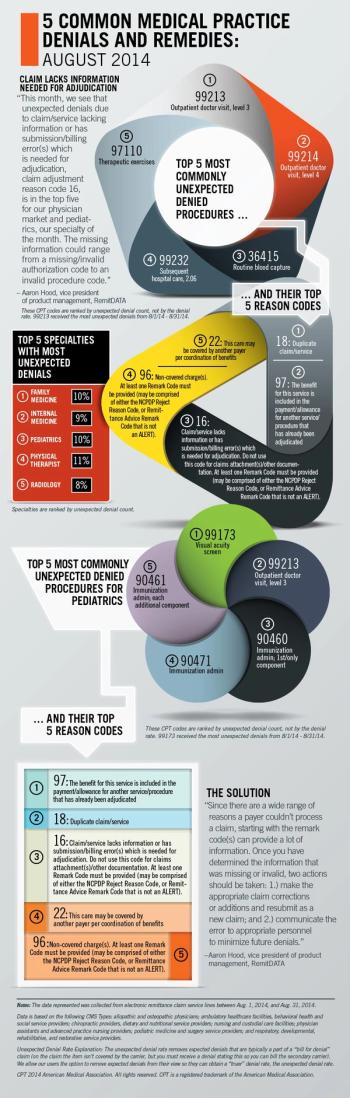
RemitDATA's Aaron Hood explores the most common unexpected denials at practices nationwide, with a special focus on pediatrics.

Combining forces to work as a team will increase your practice's chances of getting paid, and can actually decrease workload.

A change by CMS to its claims submission process for Medicare Advantage affects both physicians and their practices. Here's what you need to know.

While the initial performance of Medicare ACOs hasn't achieved prescribed cost-savings goals, that doesn't mean they aren't successful, say two practices.
If your practice hasn't already initiated a compliance program, here are four ways to begin.

In this podcast, healthcare consultant Craig Greenberg shares three tasks every practice manager should complete before the end of 2014.

To truly be ready for the ICD-10 transition, start your communications now: with your physicians, your staff, and your tech vendors.