

Payers are mobilizing their reimbursement models to ensure that they are paying only for "quality" and "efficiency" in medicine.
Payers are mobilizing their reimbursement models to ensure that they are paying only for "quality" and "efficiency" in medicine.
Ezekiel Emanuel: confidence man
Physicians Practice recently asked physicians whether they believe positive incentives for patients really work.
Understanding third-party payers can go a long way to making your life easier.
As practices continue to deal with declining reimbursement, federal and commercial payers are exploring new payment models. Here's how to prepare and respond.
Coding questions? We've got the answers
Coding questions? We've got the answers

Penny Noyes, president of Health Business Navigators and a speaker at the MGMA11 Conference, provides tips and tools to use when renegotiating payer agreements.
Here are some important points about billing for services delivered by physician assistants in your practice.
RVUs determine the amount Medicare, Medicaid, and private payers compensate physicians for various services. But it’s long been questioned whether RVUs are fair.
I know that there are going to be significantly more codes with ICD-10, but will the rules change regarding how codes are assigned?

Have the rules changed for CERT (Comprehensive Error Rate Testing) reviews?
Certainly physicians are not all-knowing and there are times when the needs of the patient does not correlate with the assumptions of the third party payers, namely the insurance companies.
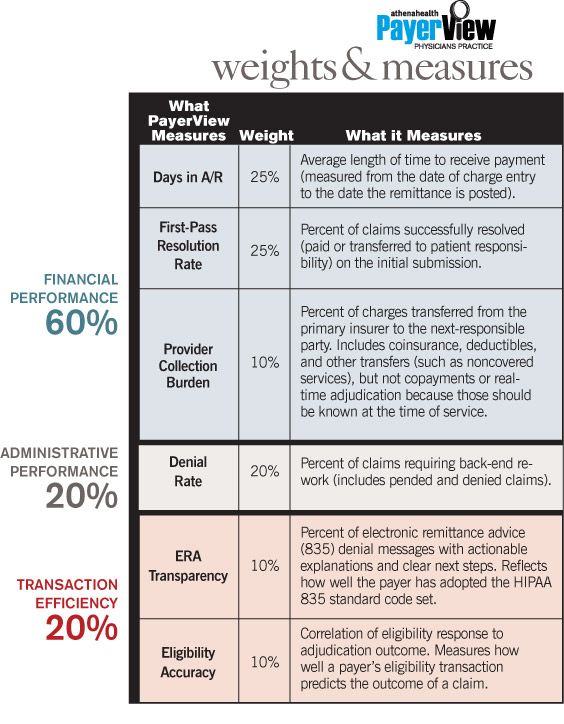
Our latest analysis of the annual ranking of payers based on hassle factor is here. The good news: Most insurers are paying faster, denying less, and making their processes more transparent. But there's still room for improvement.
Changes with ICD-9 and CPT codes have been commonplace for several years and will almost assuredly continue, even with the adoption of ICD-10 in 2013. We must adapt to the change by updating our practice management systems to include the changes to ICD-9, CPT, and new rules by CMS and insurance payers.
Once you know your practice is being evaluated by payers, monitor yourself using the same metrics to stay on top of your game.

The latest study results from the AMA when it comes to payers and their power in local markets may not be good news to all.
More and more patients are using complementary and alternative methodologies to supplement their healthcare, so it's time for docs to learn more about this growing field. Here's what you need to know about CAM and the role it can play in your practice and patient care.
As many third-party payers tighten their belts even further with restraints for prescription drug coverage, radiology services, specialty referrals, etc., we physicians are left at the end of the day spending even more time with filling out more forms, seeing less patients, and seeing our total costs increase even more as our overall efficiency decreases.
Why spend hours on the phone with payers when you can check online in minutes?
The toughest payers to collect from are your own patients. Don't despair, there are things you can do to get paid.
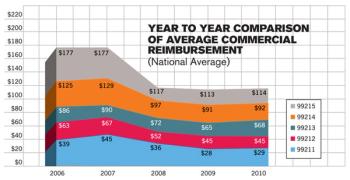
Our 2010 Fee Schedule Survey indicates that with commercial payments narrowly keeping pace with Medicare, practices need to get paid more for the work already being done.
Can you still use the consult code for Medicare and private payers?
What can you do if your payer won't reimburse your practice for cleanly submitted claims?
Negotiating rates with your payers is important, but so is the language in your contracts. Practices can face a number of possibly adverse provisions that could contradict practice policies and cause confusion with patients. But how do you discover and address such provisions?