


As the health exchange open enrollment period begins, here are some tips for managing new health insurance plans better than your practice did in 2014.

As the health exchange open enrollment period begins, here are some tips for managing new health insurance plans better than your practice did in 2014.
If you believe your practice is too small to warrant the attention of Recovery Audit Contractors, think again. Here are ways to prepare for scrutiny.

A new survey reveals most physicians feel Medicare quality improvement programs are ineffective, too complex, and too burdensome for physicians and staff.
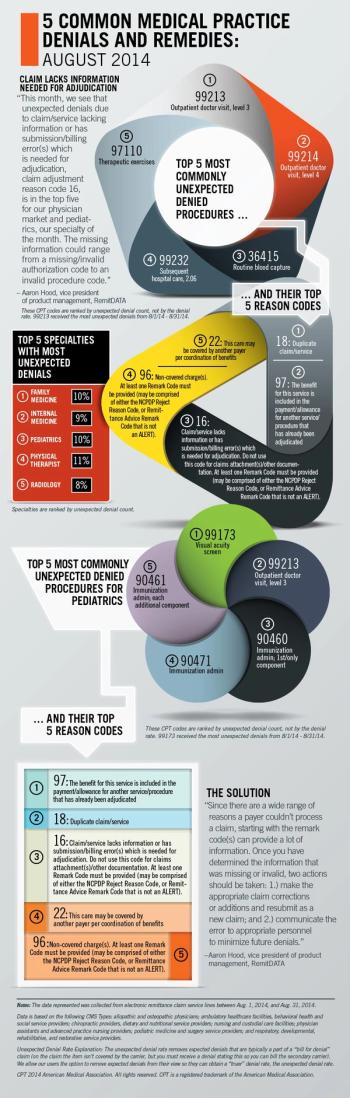
RemitDATA's Aaron Hood explores the most common unexpected denials at practices nationwide, with a special focus on pediatrics.
John C. Goodman's recent Forbes article provides just one example of how the federal government hurts, not helps. Here are six ways to fix that.
Looking for longevity as a medical practice? Joshua Halverson of ECG Management Consultants offers tips on survival and how to increase your practice's value.
2015 is a crucial year to prove cost and quality as a Medicare provider. Here's what you need to know to avoid financial penalties down the line.
The rules for being an out-of-network provider with California's new healthcare exchange plans just changed. Here's what you need to know.

Successful practices make it a priority to assess patient satisfaction regularly. Here's how to improve satisfaction scores and boost patient ratings.
The mainstream press used to relegate ridiculous claims and conclusions to "news of the weird." But, when it comes to patient choice, they are serious debates.
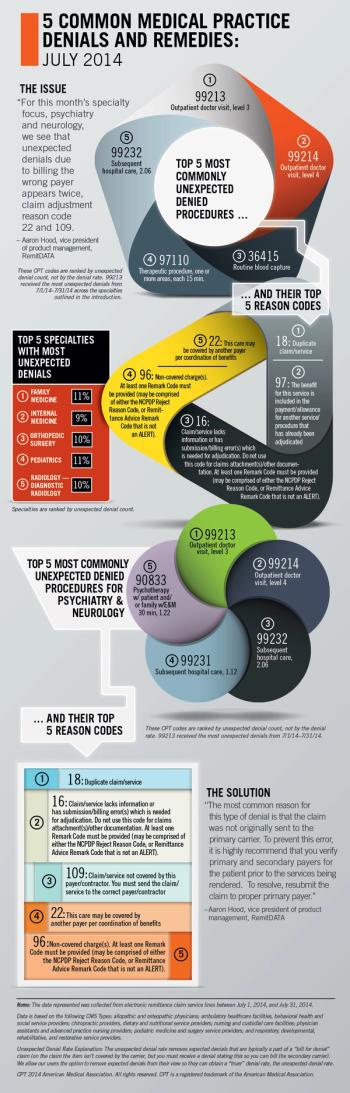
RemitDATA's Aaron Hood explores the most common unexpected denials at practices nationwide, with a special focus on psychiatry and neurology.
Physicians in small practice need to explore how they can survive in a changing financial environment.
Confused about how the healthcare system is going to change? Let's follow the money to find the answers, starting with recent news from CMS.
I have a 95 percent success rate when attempting to gain “approval” for medically needed testing. Here are some of my success strategies.
If you have been terminated by a provider, or notified you will be terminated, here's what you should know to know your recourse as a medical practice.
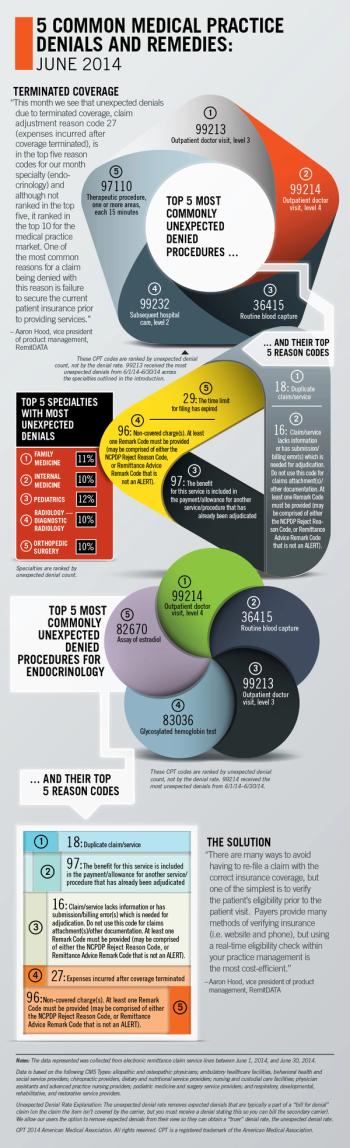
RemitDATA's vice president of product management, Aaron Hood, explores the most common unexpected denials at practices nationwide, focusing on endocrinology.
Small unpaid claims can add up to big problems for your medical practice. Here's how to find the best partner to collect what's owed for your medical services.
Here are two key areas where CMS could make adjustments to home health regulations that would benefit not just home health, but the industry in general.
Though more and more accountable care organizations are cropping up across the country, I don't believe they will be effective. Here's why.
Here are some strategies my medical practice has developed to get those unpaid patient balances off our books.
Quality of patient care is paramount, and I hope that the powers that be really think about realistic solutions to improving it.

Our 2014 Great American Physician Survey, Sponsored by Kareo, indicates 8 in 10 physicians are happy as doctors and have no regrets about their career path.
Physicians have a multitude of options when structuring ACOs. Make sure you understand all the legal requirements before committing your practice.
With costs front and center for patients, in simple and stark terms: If you can’t deliver what the consumer perceives as quality, you will lose.
Done haphazardly or postponed until a month before a new physician starts, sloppy credentialing can spell cash-flow delays and more. Here's how to do it right.