

When patients refuse to pay their cost-share for healthcare, you have a surprise go-to resource to help get you paid.
When patients refuse to pay their cost-share for healthcare, you have a surprise go-to resource to help get you paid.
When it comes to billing Medicare, you may very well be able to bill one physician incident-to another. Here's how.
When your patients have a great experience with your staff, but a not-so-great one with your billing department, it's time to make some changes.
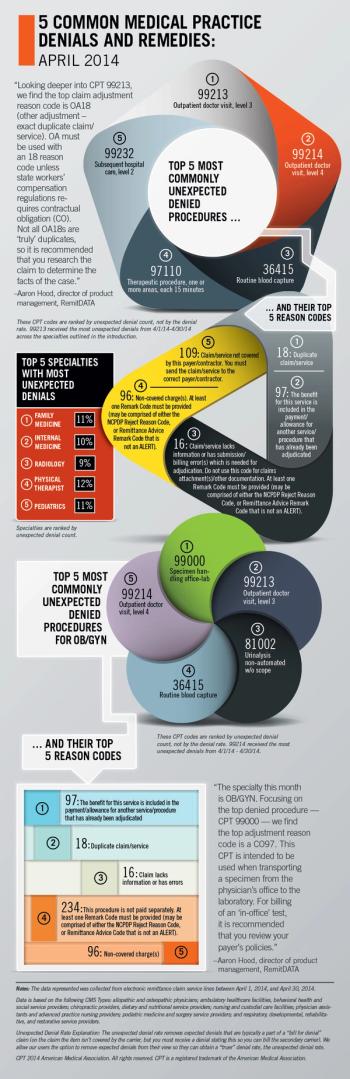
RemitDATA's director of product management, Aaron Hood, explores the most common unexpected denials at practices nationwide, with a focus on OB/GYN.
As part of its annual PayerView study, athenahealth outlines key areas where Medicaid is making business tough for physicians.
Each year, athenahealth ranks payers on how easy they are to work with providers. Here are the company's top 5 for categories including Blues, and regional.
Here are strategies for surviving a potential surge in patients with Medicaid and high-deductible exchange plans.
It hasn’t dawned on Washington that hospitals and hospital systems will never commit financial suicide by reducing volume, and physicians will pay the price.
The "recredentialing trap," strict payment reviews, and fingerprinting are all underway or on the horizon as ways payers are bullying physicians.
Know who you can turn to when you are continuously denied payment by an insurance company so that your practice can get paid all that it is due.
If your practice is looking to boost its profitability and spend more time with patients, automating your billing and collections may be a solution. Here's why.
In medical practice, a cottage industry has developed, which is dedicated solely to legal “fault finding” without regard to equity.
Only one of five surveyed physicians cites reducing cost of care as a priority when that is every payer's first priority.
More practices and payers are tying a portion of physician pay to patient satisfaction scores. But it may come with unintended consequences.
Many articles describe the benefits of health reform, but look closely and it's clear that problems are mounting for physicians and the healthcare system.
Retail-based health clinics can help ensure patient access to care as more gain insurance, but they also raise price transparency and reimbursement issues.
If you participate in quality care programs be sure you have a good understanding of your data. Otherwise you could lose out on potential revenue from payers.
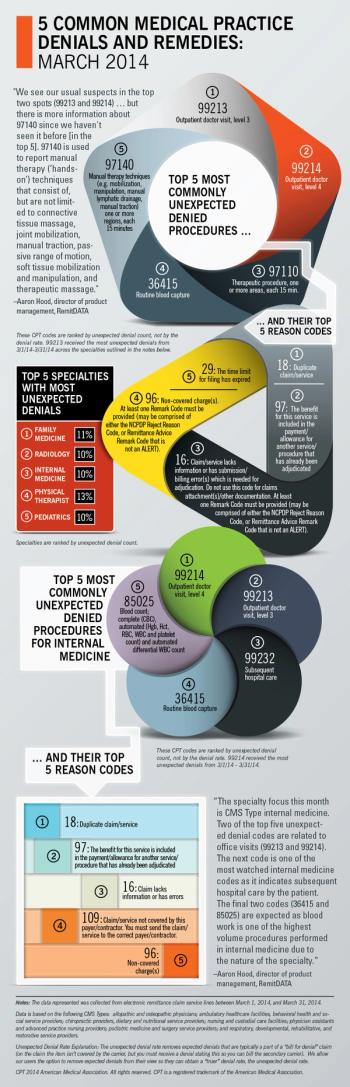
RemitDATA's director of product management, Aaron Hood, explores the most common unexpected denials at practices nationwide, with a focus on internal medicine.
If we hope to reduce Medicare spending, how about we ask physicians for important strategies vs. just ensuring expensive equipment is used properly.
Why CMS should do away with hospital-led ACOs, and instead, focus on physician-led ACOs.

Consultant Gail Levy shares nine steps to ensure your practice is orienting new patients efficiently and effectively.
Payers are using deceptive methods to get medical practices to accept low rates and new plans. Don't fall into the trap.
Bundling payments for care episodes is gaining popularity among payers. It is episodic risk-sharing, and it can be risky business for physicians.
New rules will now require Medicare enrollees who are classified as “high risk,” to subject themselves to fingerprint-based background checks.
If the government can make it appear that doctors are getting rich from Medicare payments, it will be easy to garner support to cut physician payments in the future.