

Are you competing with Dr. Google? Here's some advice on how to deal.
Are you competing with Dr. Google? Here's some advice on how to deal.
Here's how to work with your physicians to deliver the best possible outcome for your practice, yourself, and your boss.
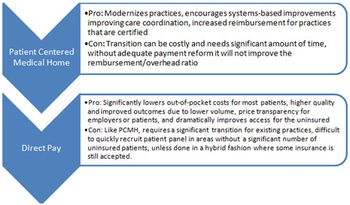
Feel like you can't do the fee-for-service practice model anymore? Here are several examples of new models in primary care that may the answer for you.
Health literacy is the ability to obtain, process, and understand basic health information and services. How many of your patients truly have a handle on their own healthcare needs?
Despite efforts to educate all clients that any payment for referrals is illegal, kickbacks continue to be paid.
Every clinician has, no doubt, run into difficult patients. Here are 10 simple tips that may help you manage these challenging appointments.

A conversation about best practices physicians can take when treating patients with chronic pain prescriptions.
Like all other arrangements into which physicians enter, you must take a moment to consider whether there are any regulatory implications.
A visit from the authorities does not necessarily mean that you have been or will be accused of anything improper, but it can hurt your reputation and your business.
Where do you stand on exchanging medical services for something other than a direct payment?
Bartering is a concept that is generally not practiced in today's times. In years past when patients had no money to pay their physician, it was common for them to bring an object other than money for payment: a chicken, a barrel of vegetables, etc.
Patients say they want their doctors’ offices to be tech-savvy. They want to communicate with you and your staff, use patient portals and smartphone applications. But there’s a difference between wanting a digital future and actually knowing how to get there. Here’s how to get your patients and staff on board.
The feds have aggressively stepped up their fraud and abuse efforts. Your practice may play by the rules, but that doesn't guarantee it will escape federal scrutiny.
Are you ready to make social media platforms part of your practice? Make sure you put reasonable constraints in place.
Posting a general disclaimer on your practice's social media platforms protects both you and your patients.
The cost of patient noncompliance, for patient outcomes, your bottom line, and the healthcare system, has been well documented. But when nagging fails, what can you do? A lot, actually. Check out these strategies for increasing patient adherence and outcomes.
The future of the direct-pay practice model is bright. Here's how it works, the affect on patients, and where it fits with models promoted by healthcare reform.
Patient portals can offer better customer service and care, but only if you can get your patients to use it. We examine the pros and cons of jumping on the portal bandwagon.

Honesty may be the best policy. But is complete truthfulness the compassionate course in every case? Here's what you need to know about the legal, ethical, and professional issues around withholding information from patients.
One of the thorniest coding questions is: Can a physician bill for family meetings when the patient is not present? If so, who gets the bill ?
A surprising number of patients withhold information from their doctors. Here’s how to identify patient dishonesty that compromises care.
Maryland, Massachusetts, and Minnesota are putting extra pressure on physicians to adopt EHRs. Now it's time to see if other states follow.
Make sure the tests you ordered get done, that you get the results and that the patients knows if anything is wrong. Print this form on carbon paper to create two copies: Send one copy to the lab. Keep the other in the office, but don't file it until the results come back and the patient is notified. If the form is still sitting out a month after the test was ordered, you'll know to follow-up.
Use this form to document internal review of and response to complaints concerning compliance with human resource, HIPAA, Medicare billing or other ethical and legal guidelines.
If you are shopping for sharps or syringes, make your selection easier using this template. Provided courtesy of Quality America, Inc. For more information about OSHA compliance, please visit www.quality-america.com.