






If you're looking to combat rising business costs at your medical practice your best bet is effective coding. Here's how to get started.
If you're looking to combat rising business costs at your medical practice your best bet is effective coding. Here's how to get started.

Collecting from patients is vital to a practice's bottom line. But often, it is an inconsistent process, done poorly. Here's what you can do about it.

Here are eight simple tips from practice management experts to collect more of the money your practice is owed by patients and payers.
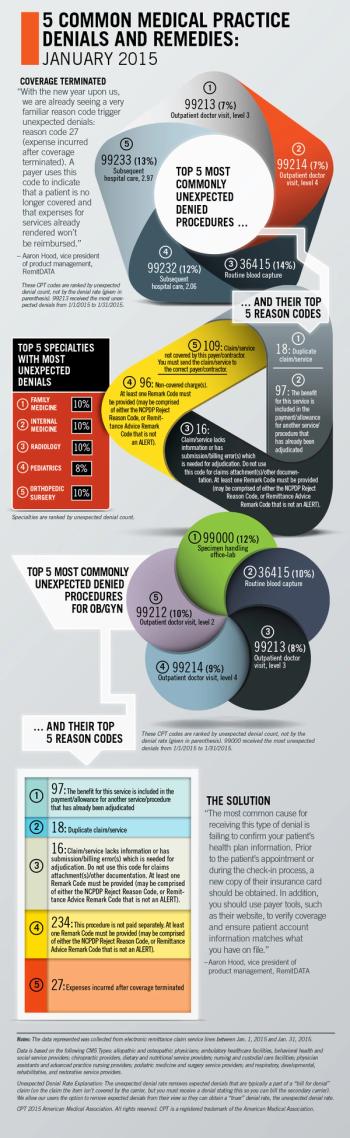
RemitDATA's Aaron Hood explores the most common unexpected denials at practices nationwide, with a special focus on OB/GYN.

Medicare's new value-based modifiers are complex. Here are the important points your practice should know about getting paid for value.

Medicare's value-based modifier is a new fee schedule adjustment that will reward or penalize physicians for quality of care in 2015.

Physicians may find that revised coding guidelines allow their coding and billing to better reflect the documented level of service provided.

Answers from our coding expert on questions regarding discharge code requirements; complex care coordination; and counseling code confusion.
CMS guidance on the 60-day rule can be confusing. Here are some answers to common questions physicians and managers have regarding compliance.
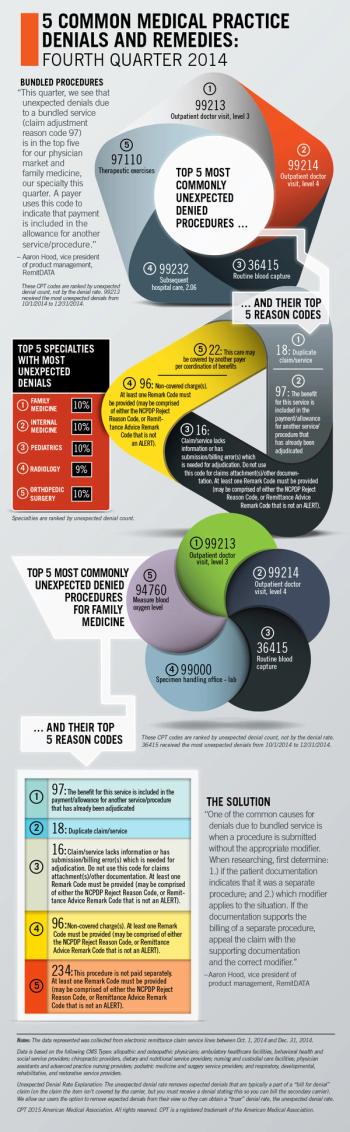
RemitDATA's Aaron Hood explores the most common unexpected denials at practices nationwide, with a special focus on family medicine.

Seen as a prime solution to reducing healthcare costs, bundled payments are on the rise. Here's how to know if they are right for your physicians and practice.
Bundled payments present "significant opportunities" to surgical practices, according to consultant Jamaal Campbell. Here's why.
Here are five ways you can mitigate the risk of a coding audit or fines in your practice, in relation to the coming ICD-10 conversion.

Having a little fun with the ICD-10 codes now will come in handy when it’s time to implement them later.

If your medical practice wants to get paid for services, make sure that you understand your true responsibility to the patient, and for working with the insurance company.

Answers from our coding expert on questions regarding the Medicare Annual Wellness Visit; urea breath tests; counseling time; and consultations.

The incident-to rules can be confusing for many physicians, practice managers, and billers and coders. Here's some helpful guidance.

Many of the health insurance exchange plans include high deductibles, so getting these patients to pay their portion of your fee is critical.

The results of our 2014 Fee Schedule Survey are in. Here's a look at some of the key findings, and how physician practices can react.

If your medical practice wants to get paid for services, do not accept financial responsibility for medical expenses that your patients incur.

Test your patient collections knowledge with our interactive quiz, featuring claims and denial data from RemitDATA from the fourth quarter of 2014.

Over the summer CMS added four new modifiers that will require a much greater degree of specification when coding surgical procedures.

Just a few changes in your operations can create a whole new atmosphere for your patients and encourage them to return to your practice.
In early 2015, your first tasks to prepare for ICD-10 should be reviewing your budget and effectively communicating the code set change.

Now is the time to act to prevent claims issues, including denials, due to ICD-10. Here are four tips.