




We asked physicians to share who or what inspired them to pursue medicine. Here's what they said.
We asked physicians to share who or what inspired them to pursue medicine. Here's what they said.

Experts say there are common compliance misconceptions that are costing practices unnecessary time and resources.

Under the HIPAA Omnibus Rule, patients can request a restriction on disclosure of PHI to a payer if they pay out of pocket, in full for a service.

A series of symptoms has left me, a physician, experiencing a series of frustrations as a patient.
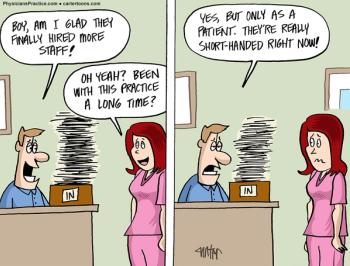
Sometimes, practices need to get a little creative when it comes to getting the daily work of seeing patients and running a business completed.

Many practices are running on razor-sharp margins. That puts them at a distinct disadvantage when it comes to dealing with payer-generated work.

Patients with chronic diseases consume a huge portion of healthcare expenses. The use of health tracking devices could change that.

Experienced physician assistants can help physicians counsel their patients on better nutrition.

One of our payer quality metrics is more like student standardized testing - the intent is good, but the result is a poor indicator of true success.

In a sea of healthcare apps, you sometimes have to stand out to make a difference. Here are four apps doing just that.

A recent survey indicates female physicians are more positive about their profession and healthcare reform than their male peers.

Before you fire off a response to a negative patient review, here are seven things to consider. You don’t want to post something potentially worse online.
Here's your opportunity to learn what you might want to avoid saying - or doing - next time a patient comes to your medical practice.

So many physicians are working hard to improve patient satisfaction. Here's the one the one thing they can do to make the most positive impact.

Membership medicine makes good economic sense for primary-care physicians and their patients. Here's how.

Staff-to-patient communication generally reflects what the staff really believes, and that often reflects poorly on a practice.

Patient education programs can help physicians empower their patients to be a partner in their own care, and meet quality metric targets.

The PBS documentary is an excellent example of how a patient's mindset leads them to healthcare ownership, not just placing that burden on the physician.

Our pediatric practice has a new policy: no more medical excuse notes. Here's why we did it and how we let everyone know about our new stance.

A new rule in Texas aims to expand the use of telemedicine, but it may have the reverse effect for some patients who may need it most.

Close communication with patients is vital to good collections. Send a collection letter after three failed statements, so patients know you mean business.

This fascinating documentary, about improving care while saving money, can teach physicians - and America - a great deal.

A new PBS documentary presents a revival of an old way of thinking in medicine; one that worked well for America for a period of time.

PAs have always taken a team approach to medicine. That focus is applicable to policy issues as well as clinical ones.